-
Merit Badges
- Legend to identify Merit Badges
- 1910 British Merit Badges
- Square 1911 - 33
- Wide Crimped 1934 & 35
-
Narrow Tan Crimped 1936 - 42
- Tan Heavyweight Cloth with Silk Embroidery and Printed Back 1936 - 37
- Tan Heavyweight Cloth with Silk Embroidery and Plain Back 1937 - 38
- Tan Lightweight Cloth with Silk Embroidery and Plain Back 1938 - 39
- Tan Lightweight Cloth with Cotton Continuous Loop Embroidery and Plain Back 1939 - 42
- Tan Lightweight Cloth with Cotton Lockstitch Embroidery and Plain Back 1939 - 42
- Blue Background 1942 - 46
- Wartime 1942 - 46
- Khaki Narrow Crimped 1946 - 59
- Green Twill Gauze Back 1960 - 68
- Fully Embroidered Merrowed Edge 1960 - 72
- Unprinted Plastic Back 1972 - 01
- Printed Plastic Back 2002 - Current
-
Merit Badge Paper
- Merit Badge Applications
- Merit Badge Cards
-
Merit Badge Pamphlets
- Type 1 White Cover - Rectangle Drawing On Cover
- Type 2 White Cover 5-375" x 8" Title at Top
- Type 3A Tan Cover - 200 Fifth Avenue
- Type 3B Tan Cover - 2 line address New York City
- Type 3C Tan Cover - 2 line address New York N.Y.
- Type 3D Tan Cover - 1 line address New York N.Y.
- Type 4 Standing Scout Cover
- Type 5A War Cover
- Type 5B Red and White
- Type 6 Photo-Red Cover
- Type 7 Full Photo Cover or Bulls-eye Cover
- Type 8 Full Photo - Green Stripe Cover
- Type 9 Full Photo - Red Stripe Cover
- Type 10A Blue Stripe - Logo above bottom blue stripe - FDL centered
- Type 10B - Blue Stripe in bottom of photo area. FDL to left of text
- Special Covers
- Boy Craft Helps
- Merit Badge Counselor's Guides
-
Youth Position
- Junior Assistant Scoutmaster
- Senior Patrol Leader
- Assistant Senior Patrol Leader
- Patrol Leader
- Assistant Patrol Leader
- Troop Guide
- Scribe
- Quartermaster
- Instructor
- Chaplain Aide
- Den Chief
- Librarian
- Musician
- Webmaster
- Bugler
- Troop Historian
- Troop Representative
- Unit Representative
- Leadership Corps
- Honor Guard
- Leave No Trace Trainer
- Outdoor Ethics Guide
-
Patrol Medallions
- Patrol Medallions Introduction
- Legend to identify Patrol Medallions
- Patrol Shoulder Knot-Ribbons
- Felt Handmade Patrol Medallions
- Square Felt Patrol Medallions
- Round Broadcloth Patrol Medallions
- Red Twill Patrol Medallions
- Multi-Color Cloth Patrol Medallions
- Tan Cloth Patrol Medallions
- Patrol Medallion Back Patches
- Woodbadge Patrol Medallion
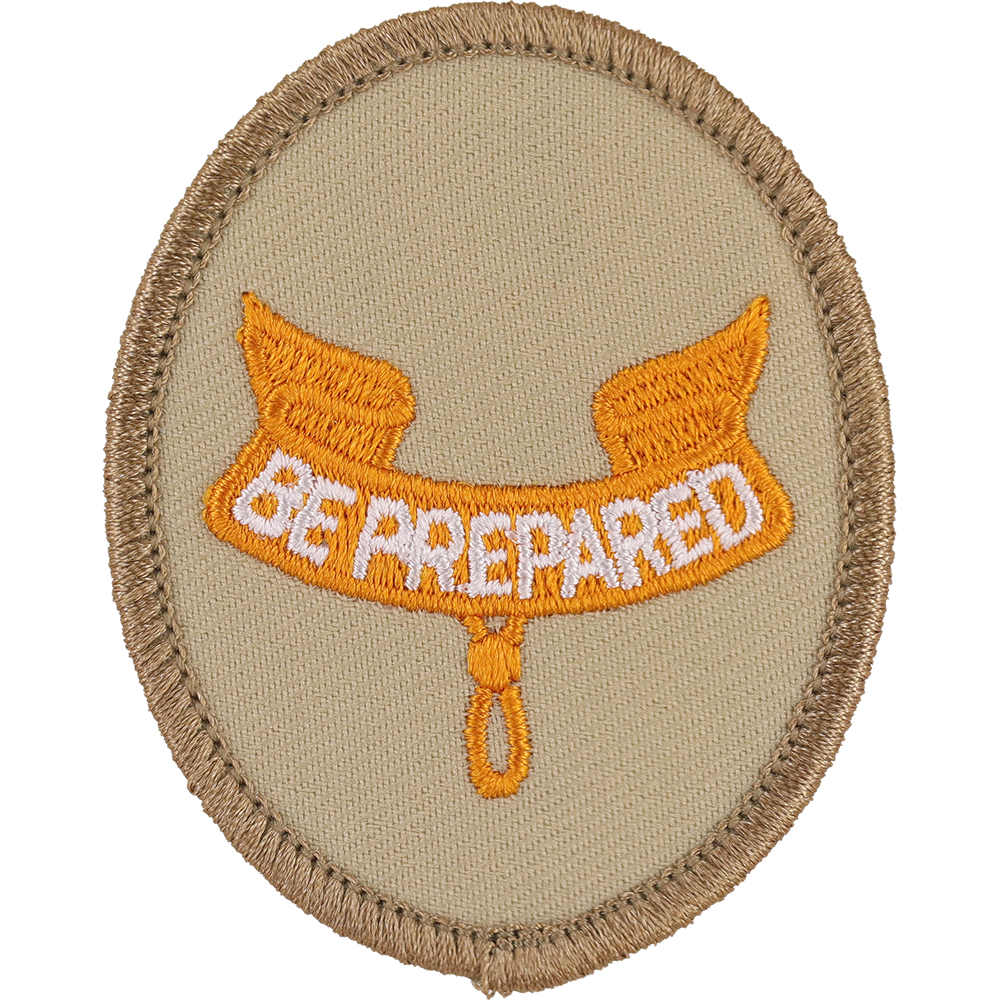
Fig. 1: SCB-2-1-04-Front
- Size: 34-12-8mm
- Cloth: Fine tan right twill
- Border: Merrowed edge
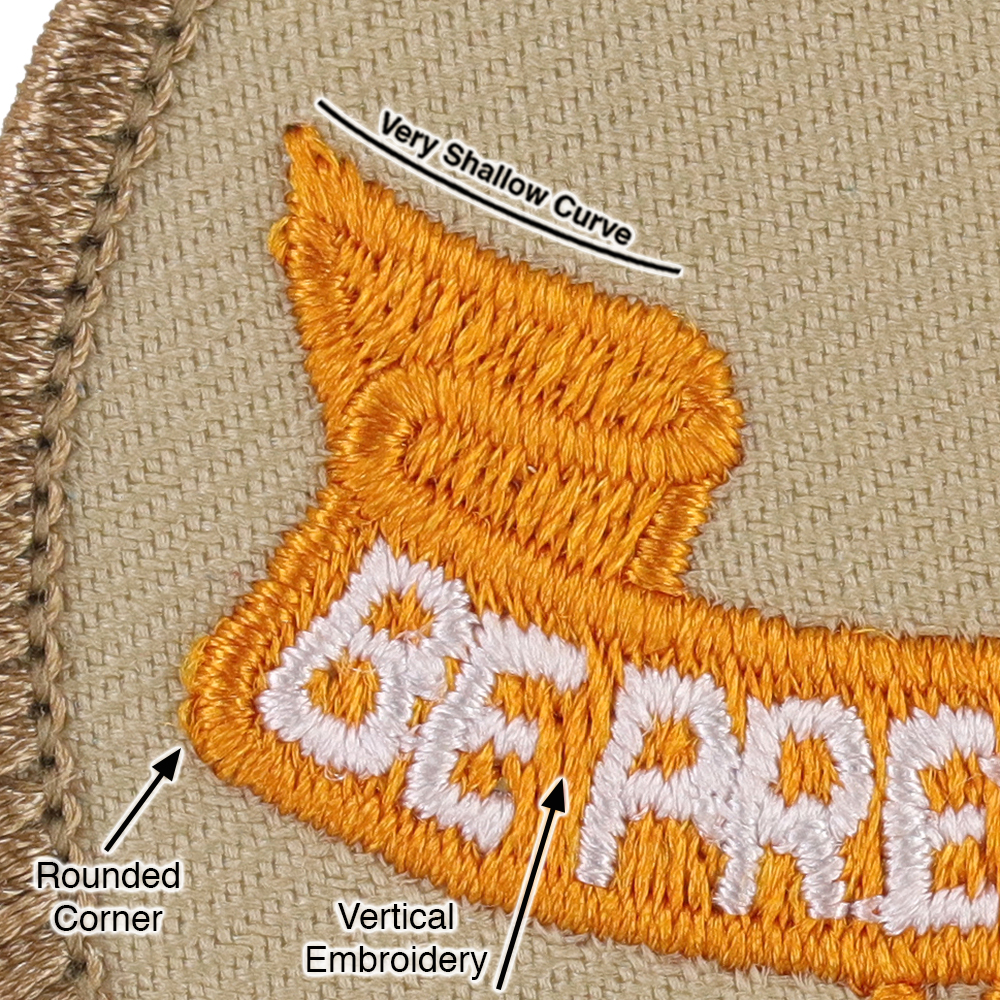
Fig. 2: SCB-2-1-04-Magnified-Scroll-Left
- Scroll Left: Tip curves up, very shallow concave curve scroll top, vertical embroidery, rounded bottom corner
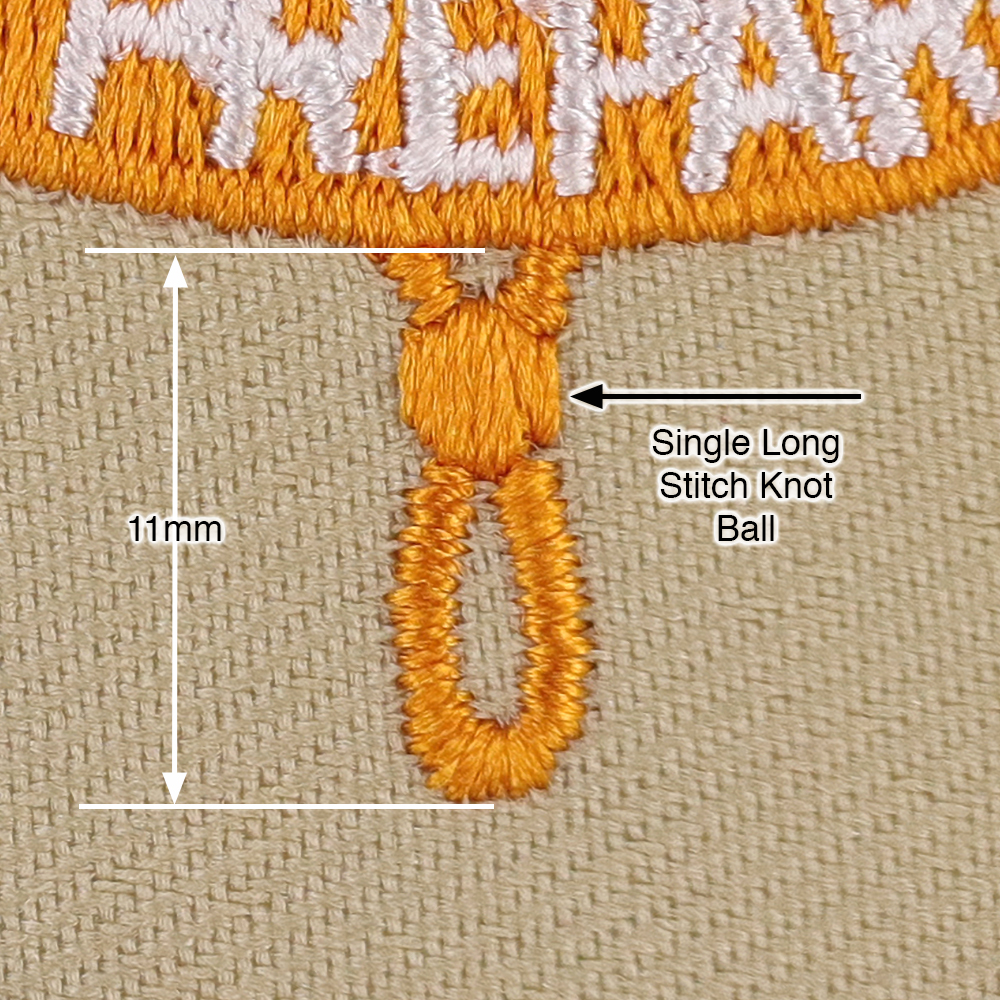
Fig. 3: SCB-2-1-04-Magnified-Knot
- Knot: 12mm rounded tip, single long stitch knot ball
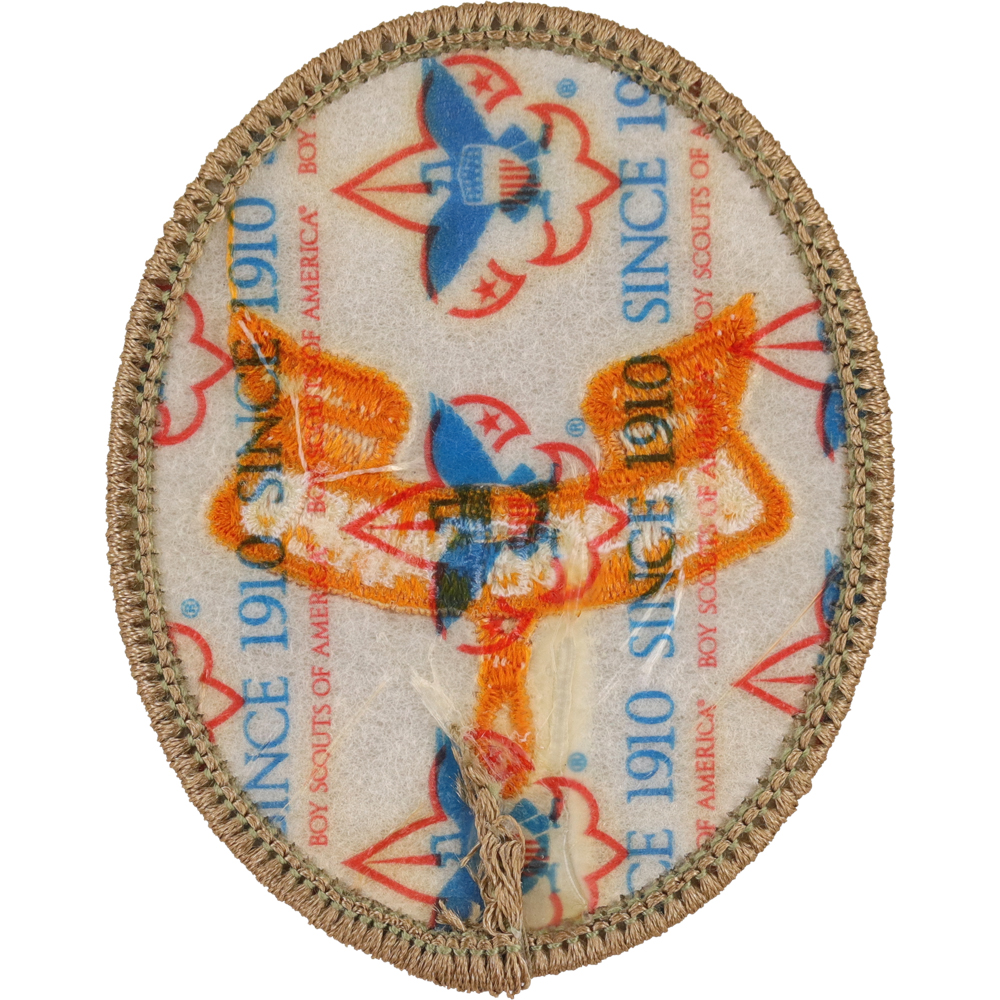
Fig. 4: SCB-2-1-04-Reverse
- Back: Pellon reincorced molded plastic with large since 1910 imprint back
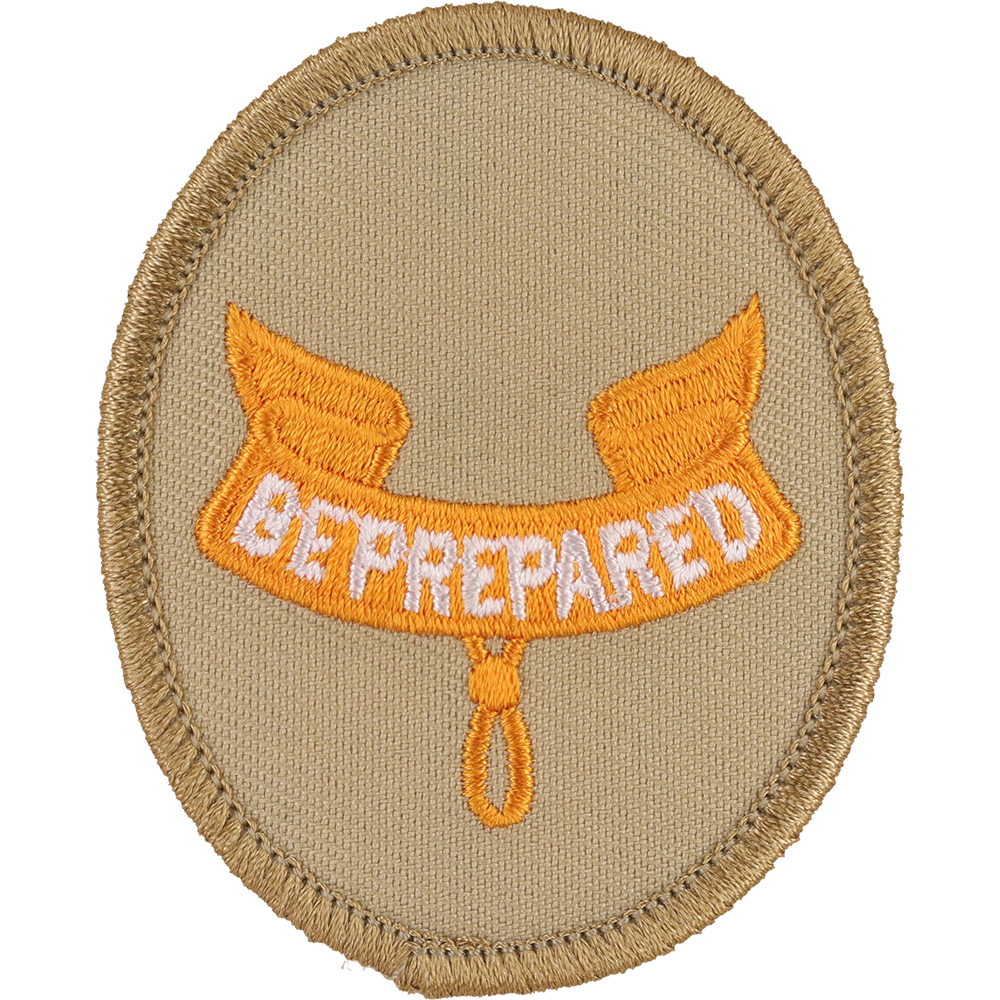
Fig. 5: SCB-2-1-04-mve1-Front
- Minor variation: Tan fine left twill
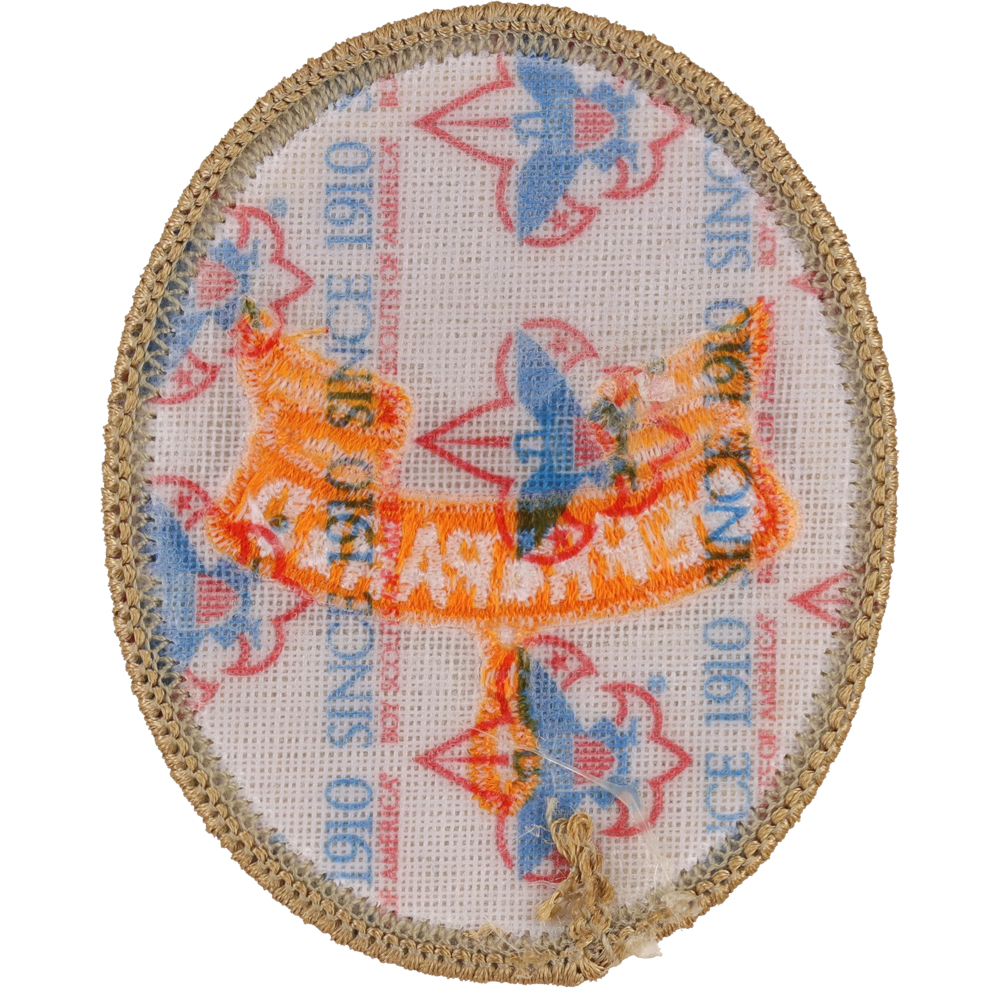
Fig. 6: SCB-2-1-04-mve1-Reverse
- Minor variation: Mesh reincorced molded plastic with large since 1910 imprint back
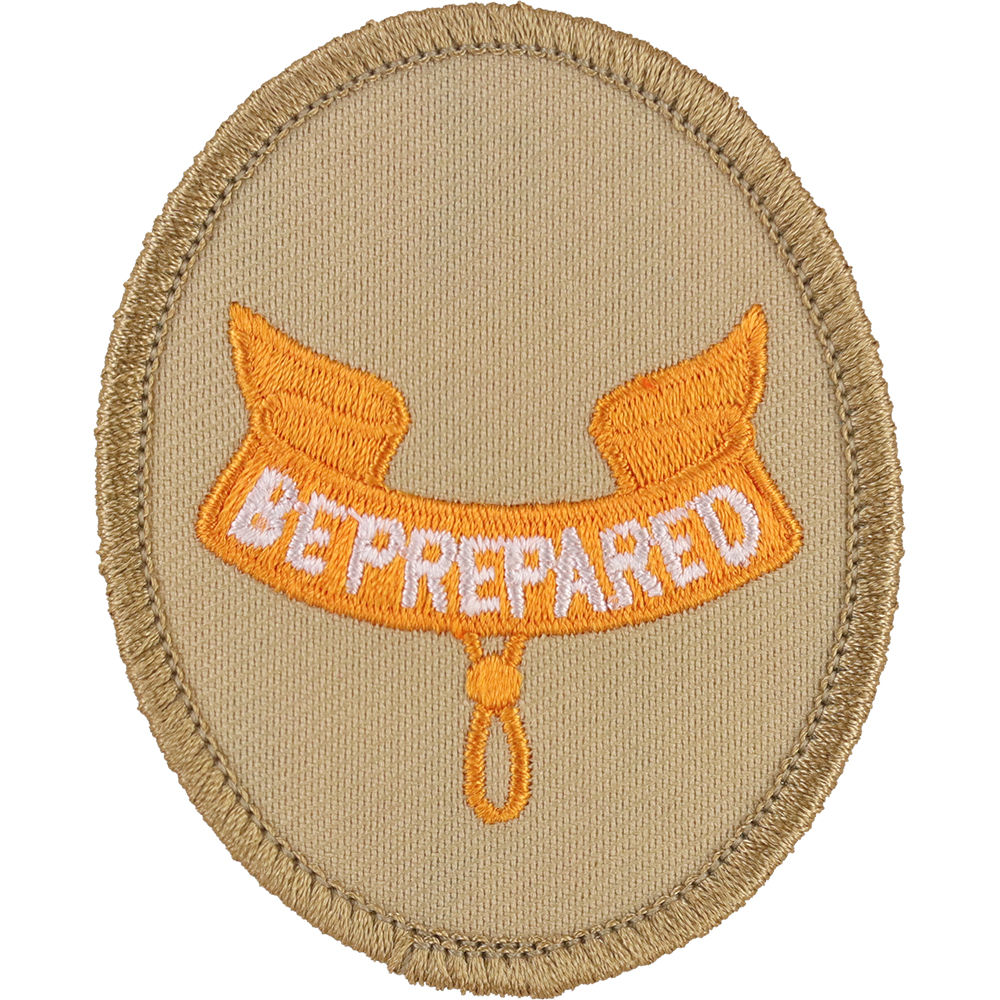
Fig. 7: SCB-2-1-04-mve2-Front
- Minor variation: Tan fine right twill
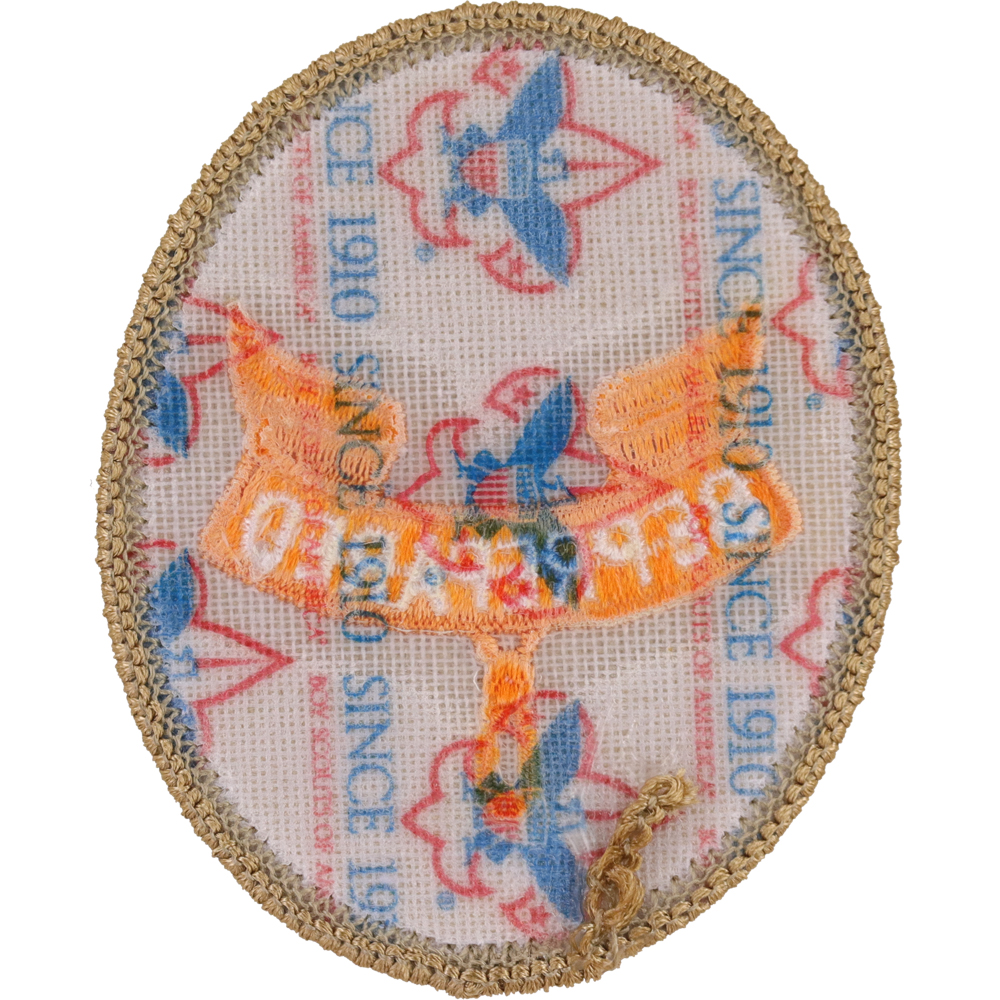
Fig. 8: SCB-2-1-04-mve2-Reverse
- Minor variation: Mesh reincorced molded plastic with large since 1910 imprint back
Item Name: Second Class Badge 2017 - Current
Item ID: SCB-2-1-04
Collector Rating: 1
Requirements January 2017 until January 2018
1a. Since joining, participate in five separate troop/patrol activities, three of which included camping overnight. These five activities do not include troop or patrol meetings. On at least two of the three campouts, spend the night in a tent you pitch or other structure that you help erect (such as a lean-to, snow cave, or tepee).
1b. Explain the principles of Leave No Trace and tell how you practiced them on a campout or outing. This outing must be different from the one used for Tenderfoot requirement 1c.
1c. On one of these campouts, select a location for your patrol site and recommend it to your patrol leader, senior patrol leader, or troop guide. Explain what factors you should consider when choosing a patrol site and where to pitch a tent.
2a. Explain when it is appropriate to use a fire for cooking or other purposes and when it would not be appropriate to do so.
2b. Use the tools listed in Tenderfoot requirement 3d to prepare tinder, kindling, and fuel wood for a cooking fire.
2c. At an approved outdoor location and time, using the tinder, kindling, and fuel wood from Second Class requirement 2b to demonstrate how to build a fire. Unless prohibited by local fire restrictions, light the fire. After allowing the flames to burn safely for at least two minutes, safely extinguish the flames with minimal impact to the fire site.
2d. Explain when it is appropriate to use a lightweight stove and when it is appropriate to use a propane stove. Set up a lightweight stove or propane stove. Unless prohibited by local fire restrictions, light the stove. Describe the safety procedures for using these types of stoves.
2e. On one campout, plan and cook one hot breakfast or lunch, select foods from the MyPlate food guide or the current USDA nutrition model. Explain the importance of good nutrition. Tell how to transport, store, and prepare the foods you selected.
2f. Demonstrate tying the sheet bend knot. Describe a situation in which you would use this knot.
2g. Demonstrate tying the bowline knot. Describe a situation in which you would use this knot.
3a. Demonstrate how a compass works and how to orient a map. Use a map to point out and tell the meaning of five map symbols.
3b. Using a compass and a map together, take a 5-mile hike (or 10 miles by bike) approved by your adult leader and your parent or guardian.
3c. Describe some hazards or injuries that you might encounter on your hike and what you can do to help prevent them.
3d. Demonstrate how to find directions during the day and at night without using a compass or an electronic device.
4. Identify or show evidence of at least 10 kinds of wild animals (birds, mammals, reptiles, fish, mollusks) found in your local area or camping location. You may show evidence by tracks, signs, or photographs you have taken.
5a. Tell what precautions must be taken for a safe swim.
5b. Demonstrate your ability to jump feetfirst into water over your head in depth, level off and swim 25 feet on the surface, stop, turn sharply, resume swimming, then return to your starting place.
5c. Demonstrate water rescue methods by reaching with your arm or leg, by reaching with a suitable object, and by throwing lines and objects.
5d. Explain why swimming rescues should not be attempted when a reaching or throwing rescue is possible, and explain why and how a rescue swimmer should avoid contact with the victim.
6a. Demonstrate first aid for the following:
- Object in the eye
- Bite of a suspected rabid animal
- Puncture wounds from a splinter, nail, and fish hook
- Serious burns (partial thickness, or second degree)
- Heat exhaustion
- Shock
- Heatstroke, dehydration, hypothermia, and hyperventilation
6b. Show what to do for “hurry” cases of stopped breathing, stroke, severe bleeding, and ingested poisoning.
6c. Tell what you can do while on a campout or hike to prevent or reduce the occurrence of the injuries listed in Second Class requirements 6a and 6b.
6d. Explain what to do in case of accidents that require emergency response in the home and backcountry. Explain what constitutes an emergency and what information you will need to provide to a responder.
6e. Tell how you should respond if you can upon the scene of a vehicular accident.
7a. After completing Tenderfoot requirement 6c, be physically active at least 30 minutes ech for five days a week for four weeks. Keep track of your activities.
7b. Share your challenges and successes in completing Second Class requirement 7a. Set a goal for continuing to include physical activity as part of your daily life and develop a plan for doing so.
7c. Participate in a school, community, or troop program on the dangers of using drugs, alcohol, and tobacco, and other practices that could be harmful to your health. Discuss your participation in the program with your family and explain the dangers of substance additions. Report to your Scoutmaster or other adult leader in your troop about which parts of the Scout Oath and Scout aw relate to what you learned.
8a. Participate in a flag ceremony for your school, religious institution, chartered organization, community, or troop activity.
8b. Explain to your leader what respect is due the flag of the United States.
8c. With your parents or guardian, decide on an amount of money that you would like to earn, based on the cost of a specific item you would like to purchase. Develop a written plan to earn the amount agreed upon and follow that plan; it is acceptable to make changes to your plan along the way. Discuss any changes made to your original plan and whether you met your goal.
8d. At a minimum of three locations, compare the cost of the item for which you are saving to determine the best place to purchase it. After completing Second Class requirement 8c, decide if you will use the amount that you earned as originally intended, save all or part of it, or use it for another purpose.
8e. Participate in two hours of service through one or more service projects approved by your Scoutmaster. Explain how your service to others relates to the Scout Oath.
9a. Explain the three R’s of personal safety and protection.
9b. Describe bullying; tell what appropriate response is to someone who is bullying you or another person.
10. Demonstrate Scout sprit by living the Scout Oath and Scout Law. Tell how you have done your duty to God and how you have lived four points of the Scout Law (not to include those used for Tenderfoot requirement 9) in your everyday life.
11. While working toward the Second Class rank, and after completing Tenderfoot requirement 10, participate in a Scoutmaster conference.
12. Successfully complete your board of review for the Second Class rank.
Requirements January 2018 until January 2023
1a. Since joining Boy Scouts, participate in five separate troop/patrol activities, at least three of which must be held outdoors. Of the outdoor activities, at least two must include overnight camping. These activities do not include troop or patrol meetings. On campouts, spend the night in a tent that you pitch or other structure that you help erect, such as a lean-to, snow cave, or tepee.
1b. Explain the principles of Leave No Trace and tell how you practiced them on a campout or outing. This outing must be different from the one used for Tenderfoot requirement 1c.
1c. On one of these campouts, select a location for your patrol site and recommend it to your patrol leader, senior patrol leader, or troop guide. Explain what factors you should consider when choosing a patrol site and where to pitch a tent.
2a. Explain when it is appropriate to use a fire for cooking or other purposes and when it would not be appropriate to do so.
2b. Use the tools listed in Tenderfoot requirement 3d to prepare tinder, kindling, and fuel wood for a cooking fire.
2c. At an approved outdoor location and time, using the tinder, kindling, and fuel wood from Second Class requirement 2b to demonstrate how to build a fire. Unless prohibited by local fire restrictions, light the fire. After allowing the flames to burn safely for at least two minutes, safely extinguish the flames with minimal impact to the fire site.
2d. Explain when it is appropriate to use a lightweight stove and when it is appropriate to use a propane stove. Set up a lightweight stove or propane stove. Unless prohibited by local fire restrictions, light the stove. Describe the safety procedures for using these types of stoves.
2e. On one campout, plan and cook one hot breakfast or lunch, select foods from the MyPlate food guide or the current USDA nutrition model. Explain the importance of good nutrition. Tell how to transport, store, and prepare the foods you selected.
2f. Demonstrate tying the sheet bend knot. Describe a situation in which you would use this knot.
2g. Demonstrate tying the bowline knot. Describe a situation in which you would use this knot.
3a. Demonstrate how a compass works and how to orient a map. Use a map to point out and tell the meaning of five map symbols.
3b. Using a compass and a map together, take a 5-mile hike (or 10 miles by bike) approved by your adult leader and your parent or guardian.
3c. Describe some hazards or injuries that you might encounter on your hike and what you can do to help prevent them.
3d. Demonstrate how to find directions during the day and at night without using a compass or an electronic device.
4. Identify or show evidence of at least 10 kinds of wild animals (birds, mammals, reptiles, fish, mollusks) found in your local area or camping location. You may show evidence by tracks, signs, or photographs you have taken.
5a. Tell what precautions must be taken for a safe swim.
5b. Demonstrate your ability to pass the BSA beginner test: jump feetfirst into water over your head in depth, level off and swim 25 feet on the surface, stop, turn sharply, resume swimming, then return to your starting place.
5c. Demonstrate water rescue methods by reaching with your arm or leg, by reaching with a suitable object, and by throwing lines and objects.
5d. Explain why swimming rescues should not be attempted when a reaching or throwing rescue is possible, and explain why and how a rescue swimmer should avoid contact with the victim.
6a. Demonstrate first aid for the following:
- Object in the eye
- Bite of a suspected rabid animal
- Puncture wounds from a splinter, nail, and fish hook
- Serious burns (partial thickness, or second degree)
- Heat exhaustion
- Shock
- Heatstroke, dehydration, hypothermia, and hyperventilation
6b. Show what to do for “hurry” cases of stopped breathing, stroke, severe bleeding, and ingested poisoning.
6c. Tell what you can do while on a campout or hike to prevent or reduce the occurrence of the injuries listed in Second Class requirements 6a and 6b.
6d. Explain what to do in case of accidents that require emergency response in the home and backcountry. Explain what constitutes an emergency and what information you will need to provide to a responder.
6e. Tell how you should respond if you can upon the scene of a vehicular accident.
7a. After completing Tenderfoot requirement 6c, be physically active at least 30 minutes ech for five days a week for four weeks. Keep track of your activities.
7b. Share your challenges and successes in completing Second Class requirement 7a. Set a goal for continuing to include physical activity as part of your daily life and develop a plan for doing so.
7c. Participate in a school, community, or troop program on the dangers of using drugs, alcohol, and tobacco, and other practices that could be harmful to your health. Discuss your participation in the program with your family and explain the dangers of substance additions. Report to your Scoutmaster or other adult leader in your troop about which parts of the Scout Oath and Scout aw relate to what you learned.
8a. Participate in a flag ceremony for your school, religious institution, chartered organization, community, or troop activity.
8b. Explain to your leader what respect is due the flag of the United States.
8c. With your parents or guardian, decide on an amount of money that you would like to earn, based on the cost of a specific item you would like to purchase. Develop a written plan to earn the amount agreed upon and follow that plan; it is acceptable to make changes to your plan along the way. Discuss any changes made to your original plan and whether you met your goal.
8d. At a minimum of three locations, compare the cost of the item for which you are saving to determine the best place to purchase it. After completing Second Class requirement 8c, decide if you will use the amount that you earned as originally intended, save all or part of it, or use it for another purpose.
8e. Participate in two hours of service through one or more service projects approved by your Scoutmaster. Explain how your service to others relates to the Scout Oath.
9a. Explain the three R’s of personal safety and protection.
9b. Describe bullying; tell what appropriate response is to someone who is bullying you or another person.
10. Demonstrate Scout sprit by living the Scout Oath and Scout Law. Tell how you have done your duty to God and how you have lived four points of the Scout Law (not to include those used for Tenderfoot requirement 9) in your everyday life.
11. While working toward the Second Class rank, and after completing Tenderfoot requirement 10, participate in a Scoutmaster conference.
12. Successfully complete your board of review for the Second Class rank.
Requirements January 202023 until Current
1a. Since joining Boy Scouts, participate in five separate troop/patrol activities, at least three of which must be held outdoors. Of the outdoor activities, at least two must include overnight camping. These activities do not include troop or patrol meetings. On campouts, spend the night in a tent that you pitch or other structure that you help erect, such as a lean-to, snow cave, or tepee.
1b. Recite the principles of Leave No Trace from memory. Explain how you follow them on all outings.
1c. On one of these campouts, select a location for your patrol site and recommend it to your patrol leader, senior patrol leader, or troop guide. Explain what factors you should consider when choosing a patrol site and where to pitch a tent.
2a. Explain when it is appropriate to use a fire for cooking or other purposes and when it would not be appropriate to do so.
2b. Use a pocketknife, and a saw or axe if needed, to prepare tinder, kindling, and fuel wood for a cooking fire.
2c. Using a minimum-impact method, and at an approved outdoor location and time, using the tinder, kindling, and fuel wood from Second Class requirement 2b to demonstrate how to build a fire. Unless prohibited by local fire restrictions, light the fire. After allowing the flames to burn safely for at least two minutes, safely extinguish the flames with minimal impact to the fire site. Properly dispose of the ashes and any charred remains.
2d. Explain when it is appropriate to use a lightweight stove and when it is appropriate to use a propane stove. Set up a lightweight stove or propane stove. Unless prohibited by local fire restrictions, light the stove. Describe the safety procedures for using these types of stoves.
2e. On one campout, plan and cook one hot breakfast or lunch, select foods from the MyPlate food guide or the current USDA nutrition model. Explain the importance of good nutrition. Tell how to transport, store, and prepare the foods you selected.
2f. Demonstrate tying the sheet bend knot. Describe a situation in which you would use this knot.
2g. Demonstrate tying the bowline knot. Describe a situation in which you would use this knot.
3a. Demonstrate how a compass works and how to orient a map. Use a map to point out and tell the meaning of five map symbols.
3b. Using a compass and a map together, take a 5-mile hike (or 10 miles by bike) approved by your adult leader and your parent or guardian.
3c. Describe some hazards or injuries that you might encounter on your hike and what you can do to help prevent them.
3d. Demonstrate how to find directions during the day and at night without using a compass or an electronic device.
4. Identify or show evidence of at least 10 kinds of wild animals (birds, mammals, reptiles, fish, mollusks) found in your local area or camping location. You may show evidence by tracks, signs, or photographs you have taken.
5a. Tell what precautions must be taken for a safe swim.
5b. Demonstrate your ability to pass the BSA beginner test: jump feetfirst into water over your head in depth, level off and swim 25 feet on the surface, stop, turn sharply, resume swimming, then return to your starting place.
5c. Demonstrate water rescue methods by reaching with your arm or leg, by reaching with a suitable object, and by throwing lines and objects.
5d. Explain why swimming rescues should not be attempted when a reaching or throwing rescue is possible, and explain why and how a rescue swimmer should avoid contact with the victim.
6a. Demonstrate first aid for the following:
- Object in the eye
- Bite of a suspected rabid animal
- Puncture wounds from a splinter, nail, and fish hook
- Serious burns (partial thickness, or second degree)
- Heat exhaustion
- Shock
- Heatstroke, dehydration, hypothermia, and hyperventilation
6b. Show what to do for “hurry” cases of stopped breathing, stroke, severe bleeding, and ingested poisoning.
6c. Tell what you can do while on a campout or hike to prevent or reduce the occurrence of the injuries listed in Second Class requirements 6a and 6b.
6d. Explain what to do in case of accidents that require emergency response in the home and backcountry. Explain what constitutes an emergency and what information you will need to provide to a responder.
6e. Tell how you should respond if you can upon the scene of a vehicular accident.
7a. After completing Tenderfoot requirement 6c, be physically active at least 30 minutes ech for five days a week for four weeks. Keep track of your activities.
7b. Share your challenges and successes in completing Second Class requirement 7a. Set a goal for continuing to include physical activity as part of your daily life and develop a plan for doing so.
7c. Participate in a school, community, or troop program on the dangers of using drugs, alcohol, and tobacco, and other practices that could be harmful to your health. Discuss your participation in the program with your family and explain the dangers of substance additions. Report to your Scoutmaster or other adult leader in your troop about which parts of the Scout Oath and Scout aw relate to what you learned.
8a. Participate in a flag ceremony for your school, religious institution, chartered organization, community, or troop activity.
8b. Explain to your leader what respect is due the flag of the United States.
8c. With your parents or guardian, decide on an amount of money that you would like to earn, based on the cost of a specific item you would like to purchase. Develop a written plan to earn the amount agreed upon and follow that plan; it is acceptable to make changes to your plan along the way. Discuss any changes made to your original plan and whether you met your goal.
8d. At a minimum of three locations, compare the cost of the item for which you are saving to determine the best place to purchase it. After completing Second Class requirement 8c, decide if you will use the amount that you earned as originally intended, save all or part of it, or use it for another purpose.
8e. Participate in two hours of service through one or more service projects approved by your Scoutmaster. Explain how your service to others relates to the Scout Oath.
9a. Explain the three R’s of personal safety and protection.
9b. Describe bullying; tell what appropriate response is to someone who is bullying you or another person.
10. Demonstrate Scout sprit by living the Scout Oath and Scout Law. Tell how you have done your duty to God and how you have lived four points of the Scout Law (not to include those used for Tenderfoot requirement 9) in your everyday life.
11. While working toward the Second Class rank, and after completing Tenderfoot requirement 10, participate in a Scoutmaster conference.
12. Successfully complete your board of review for the Second Class rank.