-
Merit Badges
- Legend to identify Merit Badges
- 1910 British Merit Badges
- Square 1911 - 33
- Wide Crimped 1934 & 35
-
Narrow Tan Crimped 1936 - 42
- Tan Heavyweight Cloth with Silk Embroidery and Printed Back 1936 - 37
- Tan Heavyweight Cloth with Silk Embroidery and Plain Back 1937 - 38
- Tan Lightweight Cloth with Silk Embroidery and Plain Back 1938 - 39
- Tan Lightweight Cloth with Cotton Continuous Loop Embroidery and Plain Back 1939 - 42
- Tan Lightweight Cloth with Cotton Lockstitch Embroidery and Plain Back 1939 - 42
- Blue Background 1942 - 46
- Wartime 1942 - 46
- Khaki Narrow Crimped 1946 - 59
- Green Twill Gauze Back 1960 - 68
- Fully Embroidered Merrowed Edge 1960 - 72
- Unprinted Plastic Back 1972 - 01
- Printed Plastic Back 2002 - Current
-
Merit Badge Paper
- Merit Badge Applications
- Merit Badge Cards
-
Merit Badge Pamphlets
- Type 1 White Cover - Rectangle Drawing On Cover
- Type 2 White Cover 5-375" x 8" Title at Top
- Type 3A Tan Cover - 200 Fifth Avenue
- Type 3B Tan Cover - 2 line address New York City
- Type 3C Tan Cover - 2 line address New York N.Y.
- Type 3D Tan Cover - 1 line address New York N.Y.
- Type 4 Standing Scout Cover
- Type 5A War Cover
- Type 5B Red and White
- Type 6 Photo-Red Cover
- Type 7 Full Photo Cover or Bulls-eye Cover
- Type 8 Full Photo - Green Stripe Cover
- Type 9 Full Photo - Red Stripe Cover
- Type 10A Blue Stripe - Logo above bottom blue stripe - FDL centered
- Type 10B - Blue Stripe in bottom of photo area. FDL to left of text
- Special Covers
- Boy Craft Helps
- Merit Badge Counselor's Guides
-
Youth Position
- Junior Assistant Scoutmaster
- Senior Patrol Leader
- Assistant Senior Patrol Leader
- Patrol Leader
- Assistant Patrol Leader
- Troop Guide
- Scribe
- Quartermaster
- Instructor
- Chaplain Aide
- Den Chief
- Librarian
- Musician
- Webmaster
- Bugler
- Troop Historian
- Troop Representative
- Unit Representative
- Leadership Corps
- Honor Guard
- Leave No Trace Trainer
- Outdoor Ethics Guide
-
Patrol Medallions
- Patrol Medallions Introduction
- Legend to identify Patrol Medallions
- Patrol Shoulder Knot-Ribbons
- Felt Handmade Patrol Medallions
- Square Felt Patrol Medallions
- Round Broadcloth Patrol Medallions
- Red Twill Patrol Medallions
- Multi-Color Cloth Patrol Medallions
- Tan Cloth Patrol Medallions
- Patrol Medallion Back Patches
- Woodbadge Patrol Medallion
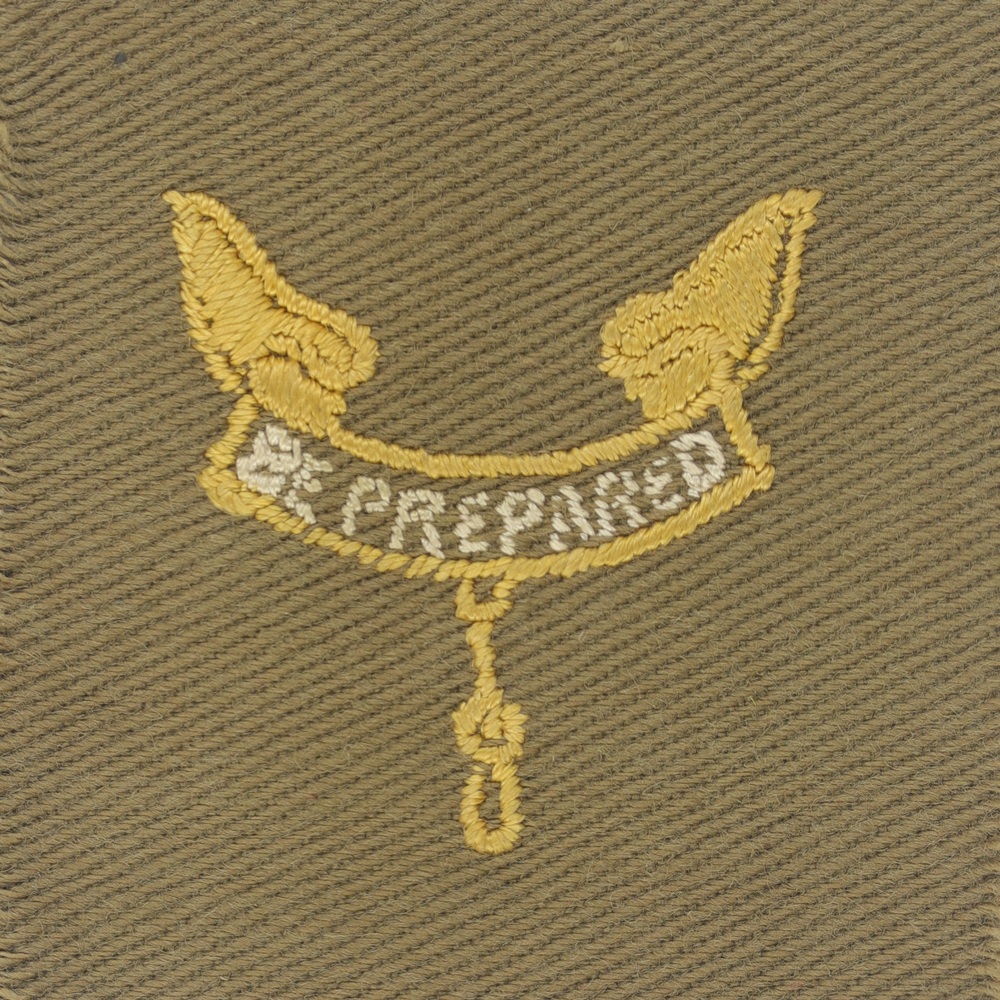
Fig. 1: SCB-1-2-02-Front
- Size: 36-13-6mm
- Cloth: Heavyweight tan right twill
- Embroidery: Continuous silk
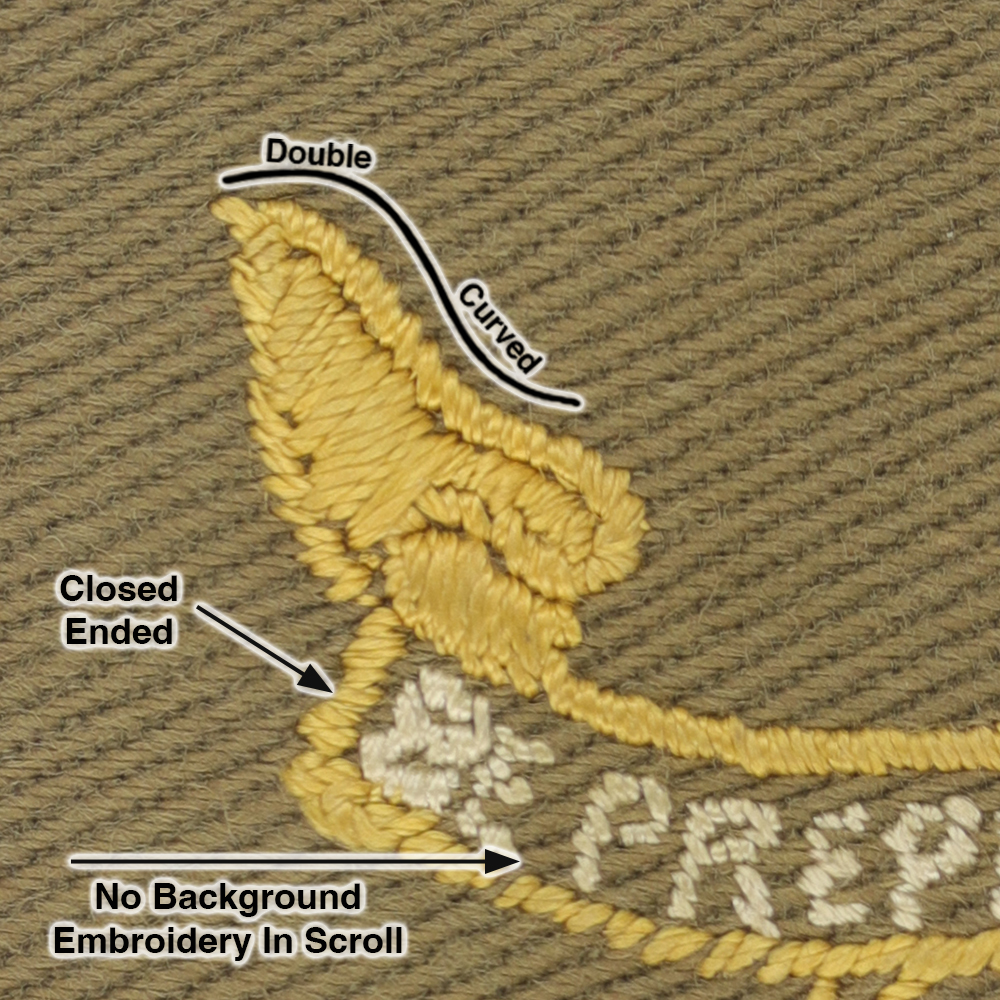
Fig. 2: SCB-1-2-02-Magnified-Scroll-Left
- Scroll Left: Double curved scroll top, closed ended smile, No background embroidery in scroll
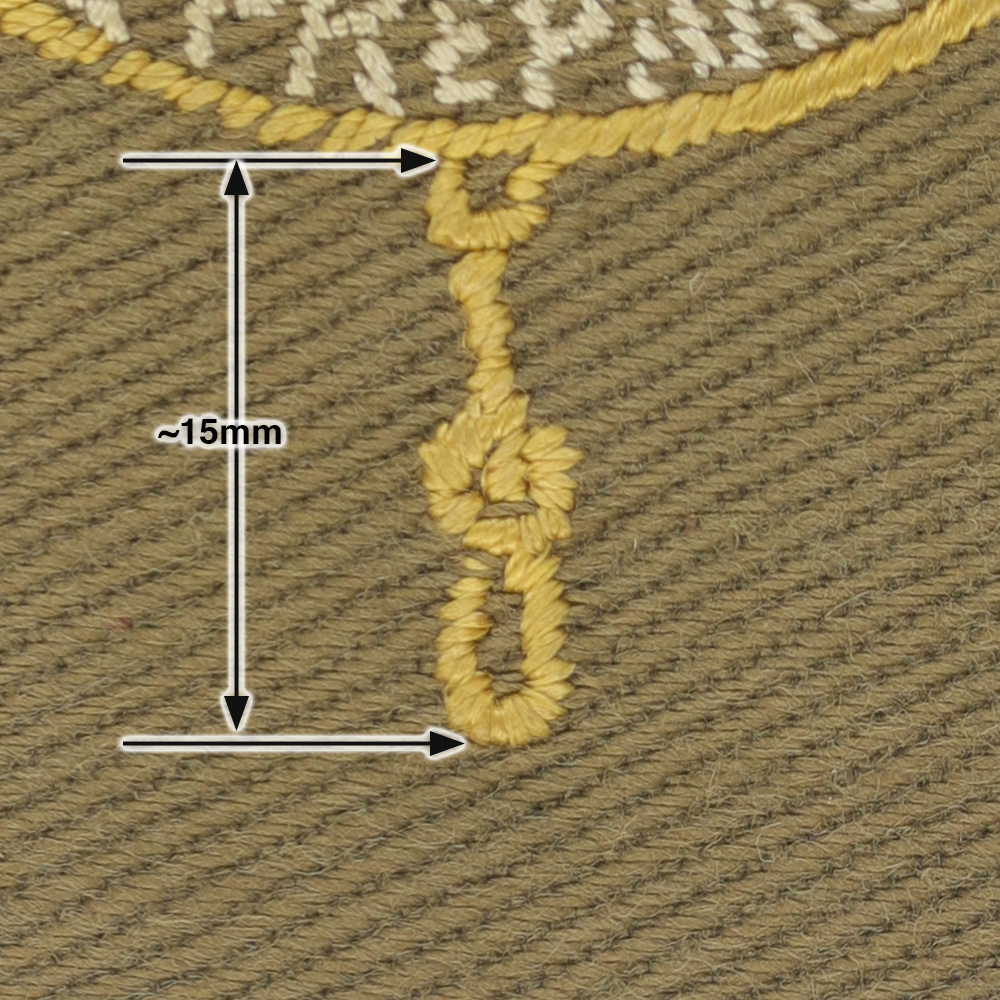
Fig. 3: SCB-1-2-02-Magnified-Knot
- Knot: 15mm knot
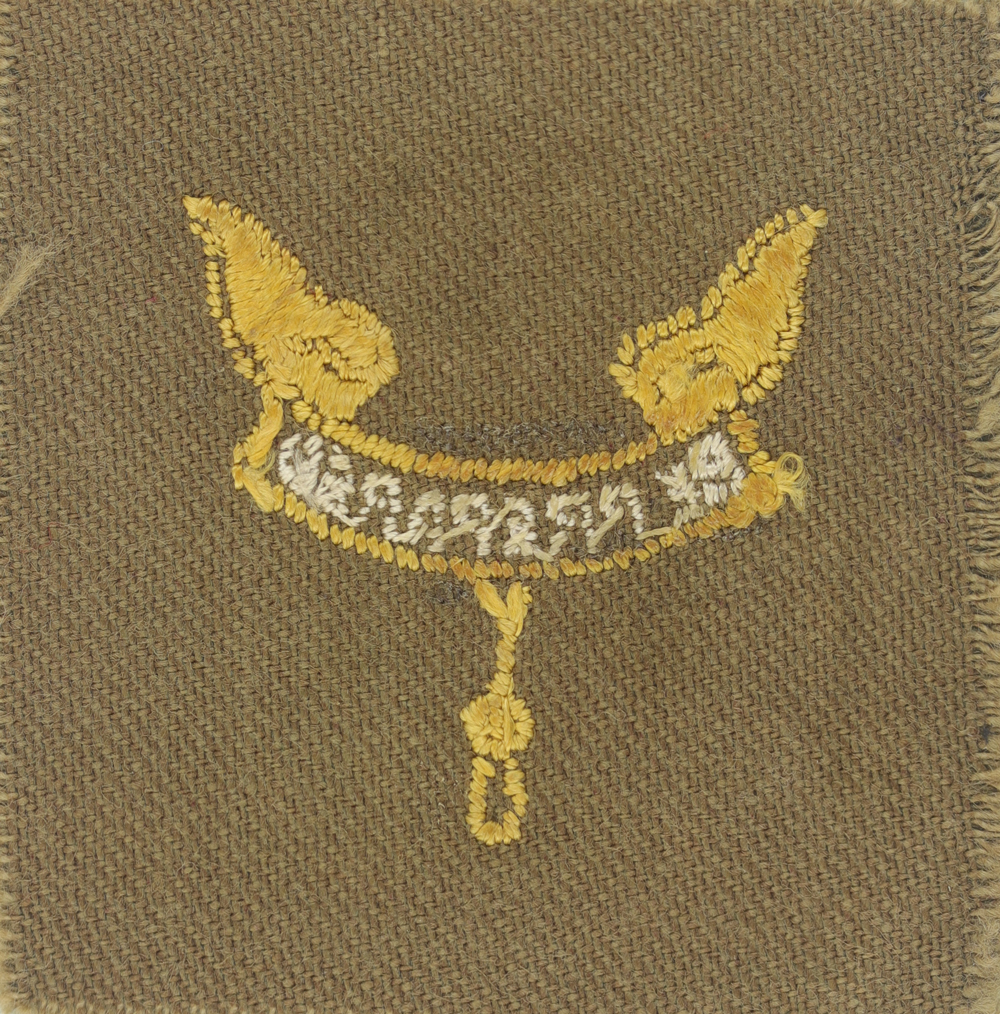
Fig. 4: SCB-1-2-02-Reverse
- Back: Black imprint back
Item Name: Second Class Badge 1920 - 1932
Item ID: SCB-1-2-02
Collector Rating: 10
Requirements December 1917 until June 1921
A tenderfoot scout may, upon passing the following tests to the satisfaction of the proper local scout authorities, be enrolled as a second-class scout. He is the entitled to wear the second class badge of the Boy Scouts of America.
1. At least one month’s service as a Tenderfoot.
2. Elementary first aid and bandaging; know the general directions for first aid for injuries; know treatment for fainting, shock, fractures, bruises, sprains, injuries in which the skin is broken, burns and scalds; demonstrate how to carry injured, and the use of the triangular and roller bandages and tourniquet.
3. Elementary signaling: Know the alphabet of the Semaphore or the General Service (International Morse) Code.
4. Track half a mile in twenty-five minutes; or, if in town, describe satisfactorily the contents of one store window out of four, observed for one minute each.
5. Go a mile in twelve minutes at scout pace – about fifty steps running and fifty walking, alternately
6. Use properly knife and hatchet.
7. Prove ability to lay and light a fire in the open, using not more than two matches.
8. Cook a quarter of a pound of meat and two potatoes in the open without the ordinary cooking.
9. Earn and deposit at least one dollar in a public bank. (Liberty Loan subscriptions and war savings certificates are acceptable)
10. Know the sixteen principle points of the compass.
Requirements June 1921 until May 1923
In communities where there are local councils, second class test should, wherever practical, be given by the Scout Executive or by the Scout Commissioner or by a duly registered depty commissioner designated by either for that purpose.
Where there is no local council, the test should be given under the direction or in the presence of one or more members of the troop committee
1. At least one month’s service as a Tenderfoot.
2. Elementary first aid and bandaging; know the general directions for first aid for injuries; know treatment for fainting, shock, fractures, bruises, sprains, injuries in which the skin is broken, burns and scalds; demonstrate how to carry injured, and the use of the triangular and roller bandages and tourniquet.
3. Elementary signaling: Know the alphabet of the Semaphore or the General Service (International Morse) Code.
4. Track half a mile in twenty-five minutes; or, if in town, describe satisfactorily the contents of one store window out of four, observed for one minute each.
5. Go a mile in twelve minutes at scout pace – about fifty steps running and fifty walking, alternately.
6. Use properly knife and hatchet.
7. Prove ability to build a fire in the open, using not more than two matches.
8. Cook a quarter of a pound of meat and two potatoes in the open without the ordinary cooking.
9. Earn and deposit at least one dollar in a public bank. (Liberty Loan subscriptions and war savings certificates are acceptable, also premiums paid on life insurance if earned)
10. Know the sixteen principle points of the compass.
Requirements May 1923 until October 1924
A tenderfoot scout may, upon passing the following tests to the satisfaction of the proper local scout authorities, be enrolled as a second-class scout. He is the entitled to wear the second class badge of the Boy Scouts of America.
1. At least one month’s service as a Tenderfoot.
2. Elementary First Aid. Know the general directions for First Aid; demonstrate treatment for fainting, shock, bruises, cuts and scratches, burns, how to carry injured, and elementary use of the triangle.
3. Elementary signaling: Know the alphabet of the Semaphore or the General Service (International Morse) Code.
4. Track half a mile in twenty-five minutes; or, if in town, describe satisfactorily the contents of one store window out of four, observed for one minute each.
5. Go a mile in twelve minutes at scout pace – about fifty steps running and fifty walking, alternately.
6. Use properly knife and hatchet.
7. Prove ability to build a fire in the open, using not more than two matches; care for, and put it out.
8. Cook a quarter of a pound of meat and two potatoes in the open without the ordinary cooking.
9. Earn and deposit at least one dollar in a public bank. (Liberty Loan subscriptions and war savings certificates are acceptable, also premiums paid on life insurance if earned)
10. Know the sixteen principle points of the compass.
Requirements October 1924 until May 1925
A tenderfoot scout may, upon passing the following tests to the satisfaction of the proper local scout authorities, be enrolled as a second-class scout. He is the entitled to wear the second class badge of the Boy Scouts of America.
1. At least one month’s service as a Tenderfoot.
2. Elementary First Aid. Know the general directions for First Aid; demonstrate treatment for fainting, shock, bruises, cuts and scratches, burns, how to carry injured, and elementary use of the triangle.
3. Elementary signaling: Know the alphabet of the Semaphore or the General Service (International Morse) Code.
4. Track half a mile in twenty-five minutes; or, if in town, describe satisfactorily the contents of one store window out of four, observed for one minute each.
5. Go a mile in twelve minutes at scout pace – about fifty steps running and fifty walking, alternately.
6. Use properly knife and hatchet.
7. Prove ability to build a fire in the open, using not more than two matches; care for, and put it out.
8. Cook a quarter of a pound of meat and two potatoes in the open without the ordinary cooking.
9. Earn and deposit at least one dollar in a public bank. (Premiums paid on life insurance, if earned, are accepted)
10. Know the sixteen principle points of the compass.
Requirements May 1925 until May 1926
A tenderfoot scout may, upon passing the following tests to the satisfaction of the proper local scout authorities, be enrolled as a second-class scout. He is the entitled to wear the second class badge of the Boy Scouts of America.
1. At least one month’s service as a Tenderfoot.
2. Know the general directions for First Aid; demonstrate treatment for fainting, shock, bruises, cuts and scratches, burns, how to carry injured, use of the triangle, and how to dress wounds*.
3. Elementary signaling: Know the alphabet of the Semaphore or the General Service (International Morse) Code.
4. Track half a mile in twenty-five minutes; or, if in town, describe satisfactorily the contents of one store window out of four, observed for one minute each.
5. Go a mile in twelve minutes at scout pace – about fifty steps running and fifty walking, alternately.
6. Use properly knife and hatchet.
7. Prove ability to build a fire in the open, using not more than two matches; care for, and put it out.
8. Cook a quarter of a pound of meat and two potatoes in the open without the ordinary cooking.
9. Earn and deposit at least one dollar in a public bank. (Premiums paid on life insurance, if earned, are accepted)
10. Know the sixteen principle points of the compass.
*Suggested Examination
The following is a specimen examination suggested for the examiner’s or council’s consideration in giving second class tests in First Aid. This examination may be varied. Each question may be given a certain percentage, and it is suggested that 80% be the passing point.
- Apply triangular bandage to the hand, head, and make a wide sling for the forearm.
- Transport another scout by two carries.
- Demonstrate or tell, how a stretcher can be improvised.
- Demonstrate on another scout artificial respiration and what to do for a case of fainting.
- Tell how to treat a cut, a dog bite and snake bite.
- Tell what to do for a burn or scald.
- The scout shall prepare an improvised inexpensive First Aid Box, using a cracker or candy tin as the box, and place in such kit at least three First Aid articles, such as a bandage triangle or roller, sterile gauze, or clean scorched cloth, powered borax, a small bottle of gasoline, etc. The articles to be made by the scout himself and the box to be labeled and decorated according to the scout’s ingenuity.
- Bandage for Second Class First Aid Test with triangle or kerchief: head bandage, arm sling, hand, foot and ankle bandage, eye and jaw bandage.
Requirements May 1926 until November 1927
A tenderfoot scout may, upon passing the following tests to the satisfaction of the proper local scout authorities, be enrolled as a second-class scout. He is the entitled to wear the second class badge of the Boy Scouts of America.
1. At least one month’s service as a Tenderfoot.
2. Know the general directions for First Aid; demonstrate treatment, including dressing, where necessary, for hemorrhage, fainting, shock, bruises, injuries in which the skin is broken, burns, sprains, and demonstrate with the triangle the following bandages: head bandage, arm (sling), hand, foot and ankle bandage, eye and jaw bandage, (roller bandages may be substituted on arm and ankle), artificial respiration*.
3. Elementary signaling: Know the alphabet of the Semaphore or the General Service (International Morse) Code.
4. Track half a mile in twenty-five minutes; or, if in town, describe satisfactorily the contents of one store window out of four, observed for one minute each.
5. Go a mile in twelve minutes at scout pace – about fifty steps running and fifty walking, alternately.
6. Use properly knife and hatchet.
7. Prove ability to build a fire in the open, using not more than two matches; care for, and put it out.
8. Cook a quarter of a pound of meat and two potatoes in the open without the ordinary cooking.
9. Earn and deposit at least one dollar in a public bank. (Premiums paid on life insurance, if earned, are accepted)
10. Know the sixteen principle points of the compass.
11. Furnish satisfactory evidence that he has put into practice in his daily life the principles of the Scout Oath and Law.
*Suggested Examination
The following is a specimen examination suggested for the examiner’s or council’s consideration in giving second class tests in First Aid. This examination may be varied. Each question may be given a certain percentage, and it is suggested that 80% be the passing point.
- Apply triangular bandage to the hand, head, and make a wide sling for the forearm.
- Transport another scout by two carries.
- Demonstrate or tell, how a stretcher can be improvised.
- Demonstrate on another scout artificial respiration and what to do for a case of fainting.
- Tell how to treat a cut, a dog bite and snake bite.
- Tell what to do for a burn or scald.
- The scout shall prepare an improvised inexpensive First Aid Box, using a cracker or candy tin as the box, and place in such kit at least three First Aid articles, such as a bandage triangle or roller, sterile gauze, or clean scorched cloth, powered borax, a small bottle of gasoline, etc. The articles to be made by the scout himself and the box to be labeled and decorated according to the scout’s ingenuity.
- Bandage for Second Class First Aid Test with triangle or kerchief: head bandage, arm sling, hand, foot and ankle bandage, eye and jaw bandage.
Requirements November 1927 until March 1931
1. At least one month’s service as a Tenderfoot.
2. Know the general directions for First Aid; demonstrate treatment, including dressing, where necessary, for hemorrhage, fainting, shock, bruises, sprains, injuries in which the skin is broken, burns, and demonstrate with the triangle the following bandages: head bandage, arm (sling), hand, foot and ankle bandage, eye and jaw bandage, (roller bandages may be substituted on arm and ankle), artificial respiration. The scout may elect to demonstrate any five requirements on animals.
3. Elementary signaling: Know the alphabet of the Semaphore Code; or the General Service (International Morse) Code; or the elementary signs of the Indian Sign Language Code.
4. Track half mile in twenty-five minutes; or, if in town, describe satisfactorily the contents of one store window out of four, observed for one minute each.
5. Go a mile in twelve minutes at scout pace – about fifty steps running and fifty walking, alternately; or lay out, measured by the stride method and stake a four acre tract of land
6. Use properly knife and hatchet.
7. Prove ability to build a fire in the open, using not more than two matches; care for, and put it out.
8. Cook a quarter of a pound of meat and two potatoes in the open without the ordinary cooking.
9. Earn and deposit at least one dollar in a public bank. (Premiums paid on life insurance are accepted if earned); or earn, own and raise some farm animal.
10. Know the sixteen principle points of the compass.
11. Demonstrate his practice of at least five rules of safety at home, or work, or school, or on the street, or road, or farm.
12. Furnish satisfactory evidence that he has put into practice in his daily life the principles of the Scout Oath and Law.
Requirements March 1931 until November 1932
1. At least one month’s service as a Tenderfoot.
2. sprains, and demonstrate with the triangle the following bandages: head bandage, arm (sling), hand, foot and ankle bandage, eye and jaw bandage, (roller bandages may be substituted on arm and ankle), artificial respiration. The scout may elect to demonstrate any five requirements on animals.
3. Elementary signaling: know the alphabet of the Semaphore Code; or the General Service (International Morse) Code; or the elementary signs of the Indian Sign Language Code; or the letters of the Manual Alphabet for the deaf, either with one or two hands.
4. Track half mile in twenty-five minutes; or, if in town, describe satisfactorily the contents of one store window out of four, observed for one minute each.
5. Go a mile in twelve minutes at scout pace – about fifty steps running and fifty walking, alternately; or lay out, measured by the stride method and stake a four acre tract of land
6. Use properly knife and hatchet.
7. Prove ability to build a fire in the open, using not more than two matches; care for, and put it out.
8. Cook a quarter of a pound of meat and two potatoes in the open without the ordinary cooking.
9. Earn and deposit at least one dollar in a public bank. (Premiums paid on life insurance are accepted if earned); or earn, own and raise some farm animal.
10. Know the sixteen principle points of the compass.
11. Demonstrate his practice of at least five rules of safety at home, or work, or school, or on the street, or road, or farm.
12. Furnish satisfactory evidence that he has put into practice in his daily life the principles of the Scout Oath and Law.
Requirements November 1932 until July 1933
1. Have at least one month’s service as a Tenderfoot an know how and when to wear the Scout uniform.
2. Know the general directions for First Aid; demonstrate treatment, including dressing, where necessary, for hemorrhage, fainting, shock, bruises, burns, injuries in which the skin is broken, sprains, and demonstrate with the triangle the following bandages: head bandage, arm (sling), hand, foot and ankle bandage, eye and jaw bandage, (roller bandages may be substituted on arm and ankle), artificial respiration. The scout may elect to demonstrate any five requirements on animals.
3. Elementary signaling: know the alphabet of the Semaphore Code; or the General Service (International Morse) Code; or the elementary signs of the Indian Sign Language Code; or the letters of the Manual Alphabet for the deaf, either with one or two hands.
4. Track half mile in twenty-five minutes; or, if in town, describe satisfactorily the contents of one store window out of four, observed for one minute each.
5. Go a mile in twelve minutes at scout pace – about fifty steps running and fifty walking, alternately; or lay out, measured by the stride method and stake a four acre tract of land
6. Use properly knife and hatchet.
7. Prove ability to build a fire in the open, using not more than two matches; care for, and put it out.
8. Cook a quarter of a pound of meat and two potatoes in the open without the ordinary cooking.
9. Earn and deposit at least one dollar in a public bank. (Premiums paid on life insurance are accepted if earned); or earn, own and raise some farm animal.
10. Know the sixteen principle points of the compass.
11. Demonstrate his practice of at least five rules of safety at home, or work, or school, or on the street, or road, or farm.
12. Furnish satisfactory evidence that he has put into practice in his daily life the principles of the Scout Oath and Law.