-
Merit Badges
- Legend to identify Merit Badges
- 1910 British Merit Badges
- Square 1911 - 33
- Wide Crimped 1934 & 35
-
Narrow Tan Crimped 1936 - 42
- Tan Heavyweight Cloth with Silk Embroidery and Printed Back 1936 - 37
- Tan Heavyweight Cloth with Silk Embroidery and Plain Back 1937 - 38
- Tan Lightweight Cloth with Silk Embroidery and Plain Back 1938 - 39
- Tan Lightweight Cloth with Cotton Continuous Loop Embroidery and Plain Back 1939 - 42
- Tan Lightweight Cloth with Cotton Lockstitch Embroidery and Plain Back 1939 - 42
- Blue Background 1942 - 46
- Wartime 1942 - 46
- Khaki Narrow Crimped 1946 - 59
- Green Twill Gauze Back 1960 - 68
- Fully Embroidered Merrowed Edge 1960 - 72
- Unprinted Plastic Back 1972 - 01
- Printed Plastic Back 2002 - Current
-
Merit Badge Paper
- Merit Badge Applications
- Merit Badge Cards
-
Merit Badge Pamphlets
- Type 1 White Cover - Rectangle Drawing On Cover
- Type 2 White Cover 5-375" x 8" Title at Top
- Type 3A Tan Cover - 200 Fifth Avenue
- Type 3B Tan Cover - 2 line address New York City
- Type 3C Tan Cover - 2 line address New York N.Y.
- Type 3D Tan Cover - 1 line address New York N.Y.
- Type 4 Standing Scout Cover
- Type 5A War Cover
- Type 5B Red and White
- Type 6 Photo-Red Cover
- Type 7 Full Photo Cover or Bulls-eye Cover
- Type 8 Full Photo - Green Stripe Cover
- Type 9 Full Photo - Red Stripe Cover
- Type 10A Blue Stripe - Logo above bottom blue stripe - FDL centered
- Type 10B - Blue Stripe in bottom of photo area. FDL to left of text
- Special Covers
- Boy Craft Helps
- Merit Badge Counselor's Guides
-
Youth Position
- Junior Assistant Scoutmaster
- Senior Patrol Leader
- Assistant Senior Patrol Leader
- Patrol Leader
- Assistant Patrol Leader
- Troop Guide
- Scribe
- Quartermaster
- Instructor
- Chaplain Aide
- Den Chief
- Librarian
- Musician
- Webmaster
- Bugler
- Troop Historian
- Troop Representative
- Unit Representative
- Leadership Corps
- Honor Guard
- Leave No Trace Trainer
- Outdoor Ethics Guide
-
Patrol Medallions
- Patrol Medallions Introduction
- Legend to identify Patrol Medallions
- Patrol Shoulder Knot-Ribbons
- Felt Handmade Patrol Medallions
- Square Felt Patrol Medallions
- Round Broadcloth Patrol Medallions
- Red Twill Patrol Medallions
- Multi-Color Cloth Patrol Medallions
- Tan Cloth Patrol Medallions
- Patrol Medallion Back Patches
- Woodbadge Patrol Medallion
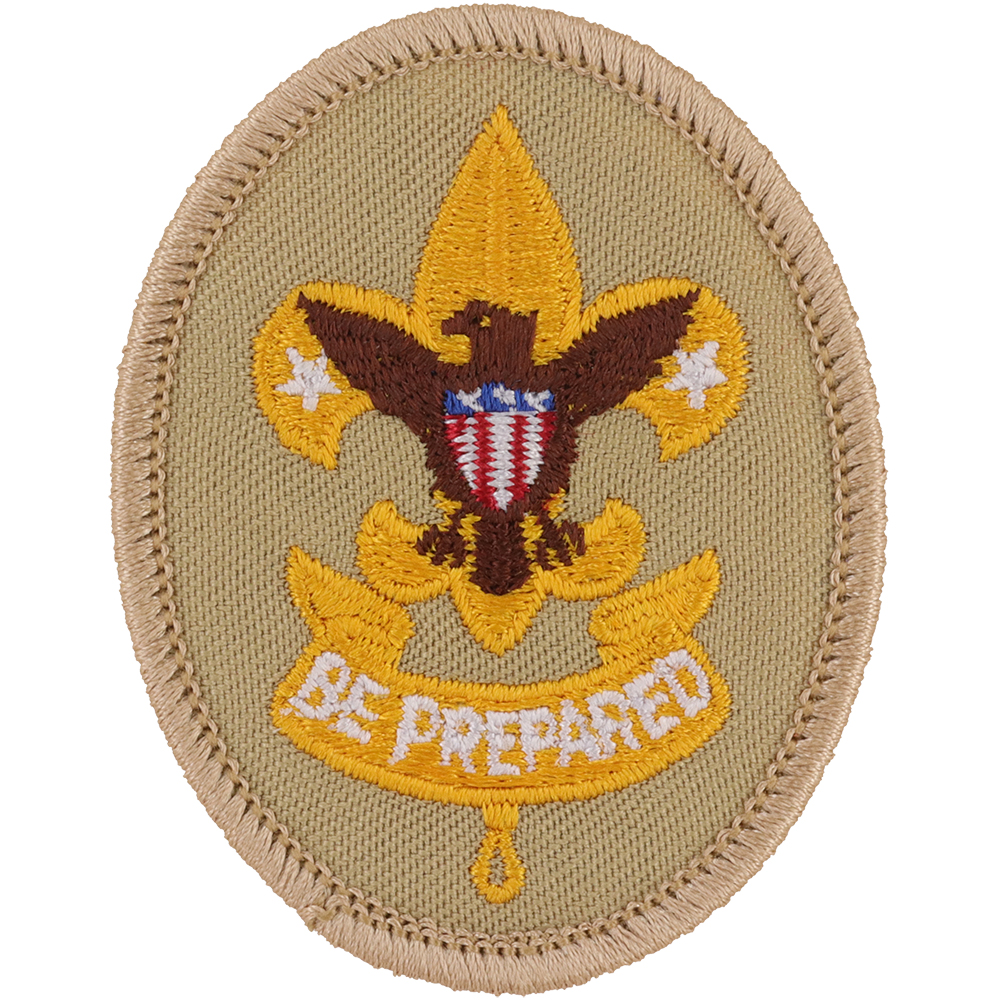
Fig. 1: FCB-2-1-03-Front
- Size: 53-55mm embroidery
- Cloth: Tan twill
- Border: Merrowed
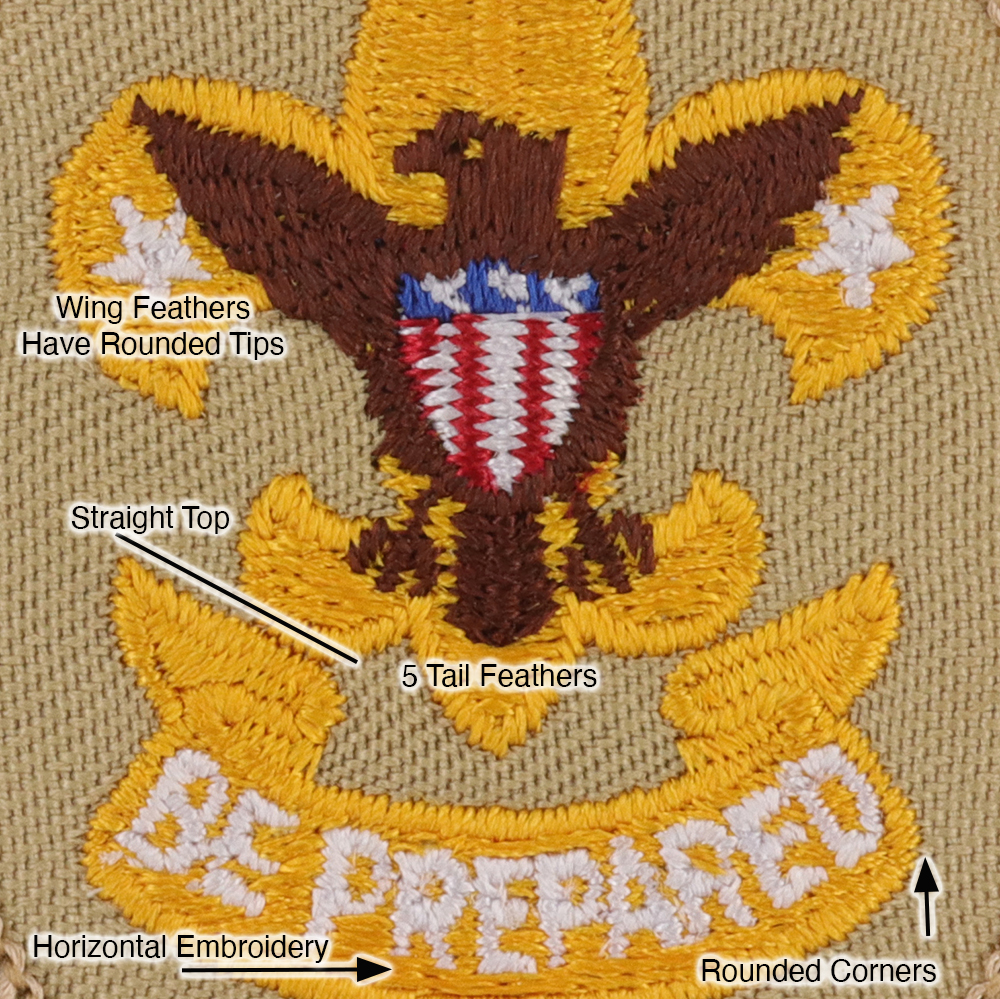
Fig. 2: FCB-2-1-03-Magnified
- Wing Feathers: 8 distinguishable
- Shield: 3 red stripes
- Tail Feathers: 5
- Scroll Tops: Single curve
- Smile: Rounded corners, horizontal embroidery
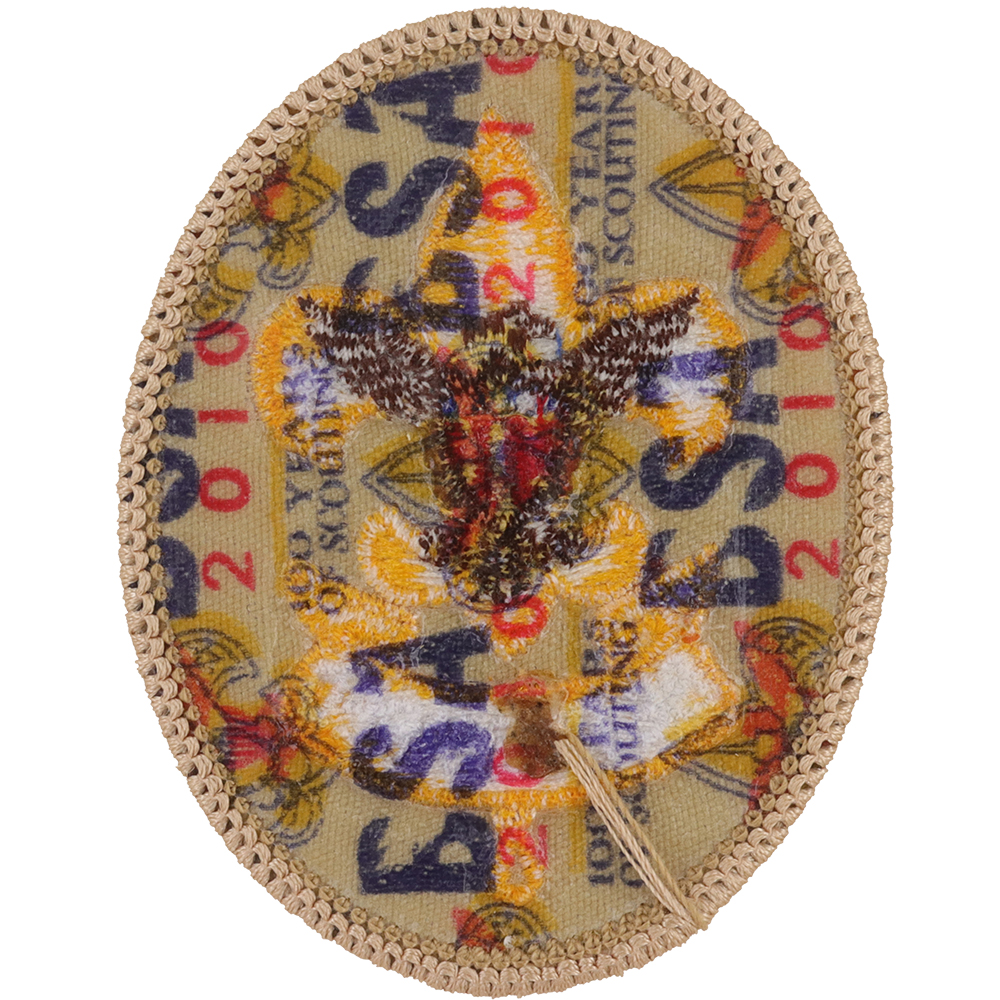
Fig. 3: FCB-2-1-03-Reverse
- Back: Molded plastic with 2010 logo
Item Name: First Class Badge 2011 - 2015
Item ID: FCB-2-1-03
Collector Rating: 1
Requirements January 2010 until January 2013
1. Demonstrate how to find directions during the day and at night without using a compass.
2. Using a map and compass, complete an orienteering course that covers at least 1 mile and requires measuring the height and/or width of designated items (tree, tower, canyon, ditch, etc.).
3. Since joining, have participated in ten separate troop/patrol activities (other than troop/patrol meetings), three of which included camping overnight. Demonstrate the principles of Leave No Trace on these outings.
4a. Help plan a patrol menu for one campout that includes at least one breakfast, one lunch, and one dinner, and that requires cooking at least two of the meals. Tell how the menu includes the foods from the food pyramid and meets nutritional needs.
4b. Using the menu planned in requirement 4a, make a list showing the cost and food amounts needed to feed three or more boys and serve these meals.
4c. Tell which pans, utensils, and other gear will be needed to cook and serve these meals.
4d. Explain the procedures to follow in the safe handling and storage of fresh meats, dairy products, eggs, vegetables, and other perishable food products. Tell how to properly dispose of camp garbage, can, plastic containers, and other rubbish.
4e. On one campout, serve as your patrol’s cook. Supervise your assistant(s) in using a stove or building a cooking fire. Prepare the breakfast, lunch, and dinner planned in requirement 4a. Lead your patrol in saying grace at the meals and supervise cleanup.
5. Visit and discuss with a selected individual approved by your leader (elected official, judge, attorney, civil servant, principal, teacher)your constitutional rights and obligations as a U.S. citizen.
6. Identify or show evidence of at least 10 kinds of native plants found in your community.
7a. Discuss when you should and should not use lashings. Then demonstrate tying the timber hitch and clove hitch and their use in square, shear, and diagonal lashings by joining two or more poles or staves together.
7b. Demonstrate tying the timber hitch and clove hitch and their use in square, shear, and diagonal lashings by joining two or more poles or staves together.
7c. Use lashing to make a useful camp gadget.
8a. Demonstrate tying the bowline knot and describe several ways it can be used.
8b. Demonstrate bandages for a sprained ankle and for injuries on the head, the upper arm, and the collarbone.
8c. Show how to transport by yourself, and with one other person, a person
- from a smoke-filled room
- with a sprained ankle, for at least 25 yards
8d. Tell the five most common signals of a heart attack. Explain the steps (procedures) in cardiopulmonary resuscitation (CPR).
9a. Tell what precautions must be taken for a safe trip afloat.
9b. Successfully complete the BSA swimmer test.
9c. With a helper and a practice victim, show a line rescue both as tender and as rescuer. (The practice victim should be approximately 30 feet from shore in deep water.)
10. Tell someone who is eligible to join Boy Scouts, or an inactive Boy Scout, about your troop’s activities. Invite them to a troop outing, activity, service project, or meeting. Tell him how to join, or encourage the inactive Boy Scout to become active.
11. Describe the three things you should avoid doing related to use of the Internet. Describe a cyberbully and how you should respond to one.
12. Demonstrate Scout spirit by living the Scout Oath (Promise) and Scout Law in your everyday life. Discuss four specific examples (different from those used for Tenderfoot requirement 13 and Second Class requirement 11) of how you have lived the points of the Scout Law in your daily life.
13. Participate in a Scoutmaster conference.
14. Complete your board of review.
Requirements January 2013 until January 2015
1. Demonstrate how to find directions during the day and at night without using a compass.
2. Using a map and compass, complete an orienteering course that covers at least 1 mile and requires measuring the height and/or width of designated items (tree, tower, canyon, ditch, etc.).
3. Since joining, have participated in ten separate troop/patrol activities (other than troop/patrol meetings), three of which included camping overnight. Demonstrate the principles of Leave No Trace on these outings.
4a. Help plan a patrol menu for one campout that includes at least one breakfast, one lunch, and one dinner, and that requires cooking at least two of the meals. Tell how the menu includes the foods from the MyPlate food guide or the current USDA nutrition model and meets nutritional needs.
4b. Using the menu planned in requirement 4a, make a list showing the cost and food amounts needed to feed three or more boys and serve these meals.
4c. Tell which pans, utensils, and other gear will be needed to cook and serve these meals.
4d. Explain the procedures to follow in the safe handling and storage of fresh meats, dairy products, eggs, vegetables, and other perishable food products. Tell how to properly dispose of camp garbage, can, plastic containers, and other rubbish.
4e. On one campout, serve as your patrol’s cook. Supervise your assistant(s) in using a stove or building a cooking fire. Prepare the breakfast, lunch, and dinner planned in requirement 4a. Lead your patrol in saying grace at the meals and supervise cleanup.
5. Visit and discuss with a selected individual approved by your leader (elected official, judge, attorney, civil servant, principal, teacher)your constitutional rights and obligations as a U.S. citizen.
6. Identify or show evidence of at least 10 kinds of native plants found in your community.
7a. Discuss when you should and should not use lashings. Then demonstrate tying the timber hitch and clove hitch and their use in square, shear, and diagonal lashings by joining two or more poles or staves together.
7b. Demonstrate tying the timber hitch and clove hitch and their use in square, shear, and diagonal lashings by joining two or more poles or staves together.
7c. Use lashing to make a useful camp gadget.
8a. Demonstrate tying the bowline knot and describe several ways it can be used.
8b. Demonstrate bandages for a sprained ankle and for injuries on the head, the upper arm, and the collarbone.
8c. Show how to transport by yourself, and with one other person, a person
- from a smoke-filled room
- with a sprained ankle, for at least 25 yards
8d. Tell the five most common signals of a heart attack. Explain the steps (procedures) in cardiopulmonary resuscitation (CPR).
9a. Tell what precautions must be taken for a safe trip afloat.
9b. Successfully complete the BSA swimmer test.
9c. With a helper and a practice victim, show a line rescue both as tender and as rescuer. (The practice victim should be approximately 30 feet from shore in deep water.)
10. Tell someone who is eligible to join Boy Scouts, or an inactive Boy Scout, about your troop’s activities. Invite them to a troop outing, activity, service project, or meeting. Tell him how to join, or encourage the inactive Boy Scout to become active.
11. Describe the three things you should avoid doing related to use of the Internet. Describe a cyberbully and how you should respond to one.
12. Demonstrate Scout spirit by living the Scout Oath (Promise) and Scout Law in your everyday life. Discuss four specific examples (different from those used for Tenderfoot requirement 13 and Second Class requirement 11) of how you have lived the points of the Scout Law in your daily life.
13. Participate in a Scoutmaster conference.
14. Complete your board of review.
Requirements January 2015 until January 2016
1. Demonstrate how to find directions during the day and at night without using a compass.
2. Using a map and compass, complete an orienteering course that covers at least 1 mile and requires measuring the height and/or width of designated items (tree, tower, canyon, ditch, etc.).
3. Since joining, have participated in ten separate troop/patrol activities (other than troop/patrol meetings), three of which included camping overnight. Demonstrate the principles of Leave No Trace on these outings.
4a. Help plan a patrol menu for one campout that includes at least one breakfast, one lunch, and one dinner, and that requires cooking at least two of the meals. Tell how the menu includes the foods from the MyPlate food guide or the current USDA nutrition model and meets nutritional needs.
4b. Using the menu planned in requirement 4a, make a list showing the cost and food amounts needed to feed three or more boys and serve these meals.
4c. Tell which pans, utensils, and other gear will be needed to cook and serve these meals.
4d. Explain the procedures to follow in the safe handling and storage of fresh meats, dairy products, eggs, vegetables, and other perishable food products. Tell how to properly dispose of camp garbage, can, plastic containers, and other rubbish.
4e. On one campout, serve as your patrol’s cook. Supervise your assistant(s) in using a stove or building a cooking fire. Prepare the breakfast, lunch, and dinner planned in requirement 4a. Lead your patrol in saying grace at the meals and supervise cleanup.
5. Visit and discuss with a selected individual approved by your leader (elected official, judge, attorney, civil servant, principal, teacher)your constitutional rights and obligations as a U.S. citizen.
6. Identify or show evidence of at least 10 kinds of native plants found in your community.
7a. Discuss when you should and should not use lashings. Then demonstrate tying the timber hitch and clove hitch and their use in square, shear, and diagonal lashings by joining two or more poles or staves together.
7b. Demonstrate tying the timber hitch and clove hitch and their use in square, shear, and diagonal lashings by joining two or more poles or staves together.
7c. Use lashing to make a useful camp gadget.
8a. Demonstrate tying the bowline knot and describe several ways it can be used.
8b. Demonstrate bandages for a sprained ankle and for injuries on the head, the upper arm, and the collarbone.
8c. Show how to transport by yourself, and with one other person, a person
- from a smoke-filled room
- with a sprained ankle, for at least 25 yards
8d. Tell the five most common signals of a heart attack. Explain the steps (procedures) in cardiopulmonary resuscitation (CPR).
9a. Tell what precautions must be taken for a safe trip afloat.
9b. Successfully complete the BSA swimmer test.
9c. With a helper and a practice victim, show a line rescue both as tender and as rescuer. (The practice victim should be approximately 30 feet from shore in deep water.)
10. Tell someone who is eligible to join Boy Scouts, or an inactive Boy Scout, about your troop’s activities. Invite them to a troop outing, activity, service project, or meeting. Tell him how to join, or encourage the inactive Boy Scout to become active.
11. Describe the three things you should avoid doing related to use of the Internet. Describe a cyberbully and how you should respond to one.
12. Demonstrate Scout spirit by living the Scout Oath (Promise) and Scout Law in your everyday life. Discuss four specific examples (different from those used for Tenderfoot requirement 13 and Second Class requirement 11) of how you have lived the points of the Scout Law in your daily life.
13. Participate in a Scoutmaster conference.
14. Successfully complete your board of review for the First Class rank..