-
Merit Badges
- Legend to identify Merit Badges
- 1910 British Merit Badges
- Square 1911 - 33
- Wide Crimped 1934 & 35
-
Narrow Tan Crimped 1936 - 42
- Tan Heavyweight Cloth with Silk Embroidery and Printed Back 1936 - 37
- Tan Heavyweight Cloth with Silk Embroidery and Plain Back 1937 - 38
- Tan Lightweight Cloth with Silk Embroidery and Plain Back 1938 - 39
- Tan Lightweight Cloth with Cotton Continuous Loop Embroidery and Plain Back 1939 - 42
- Tan Lightweight Cloth with Cotton Lockstitch Embroidery and Plain Back 1939 - 42
- Blue Background 1942 - 46
- Wartime 1942 - 46
- Khaki Narrow Crimped 1946 - 59
- Green Twill Gauze Back 1960 - 68
- Fully Embroidered Merrowed Edge 1960 - 72
- Unprinted Plastic Back 1972 - 01
- Printed Plastic Back 2002 - Current
-
Merit Badge Paper
- Merit Badge Applications
- Merit Badge Cards
-
Merit Badge Pamphlets
- Type 1 White Cover - Rectangle Drawing On Cover
- Type 2 White Cover 5-375" x 8" Title at Top
- Type 3A Tan Cover - 200 Fifth Avenue
- Type 3B Tan Cover - 2 line address New York City
- Type 3C Tan Cover - 2 line address New York N.Y.
- Type 3D Tan Cover - 1 line address New York N.Y.
- Type 4 Standing Scout Cover
- Type 5A War Cover
- Type 5B Red and White
- Type 6 Photo-Red Cover
- Type 7 Full Photo Cover or Bulls-eye Cover
- Type 8 Full Photo - Green Stripe Cover
- Type 9 Full Photo - Red Stripe Cover
- Type 10A Blue Stripe - Logo above bottom blue stripe - FDL centered
- Type 10B - Blue Stripe in bottom of photo area. FDL to left of text
- Special Covers
- Boy Craft Helps
- Merit Badge Counselor's Guides
-
Youth Position
- Junior Assistant Scoutmaster
- Senior Patrol Leader
- Assistant Senior Patrol Leader
- Patrol Leader
- Assistant Patrol Leader
- Troop Guide
- Scribe
- Quartermaster
- Instructor
- Chaplain Aide
- Den Chief
- Librarian
- Musician
- Webmaster
- Bugler
- Troop Historian
- Troop Representative
- Unit Representative
- Leadership Corps
- Honor Guard
- Leave No Trace Trainer
- Outdoor Ethics Guide
-
Patrol Medallions
- Patrol Medallions Introduction
- Legend to identify Patrol Medallions
- Patrol Shoulder Knot-Ribbons
- Felt Handmade Patrol Medallions
- Square Felt Patrol Medallions
- Round Broadcloth Patrol Medallions
- Red Twill Patrol Medallions
- Multi-Color Cloth Patrol Medallions
- Tan Cloth Patrol Medallions
- Patrol Medallion Back Patches
- Woodbadge Patrol Medallion
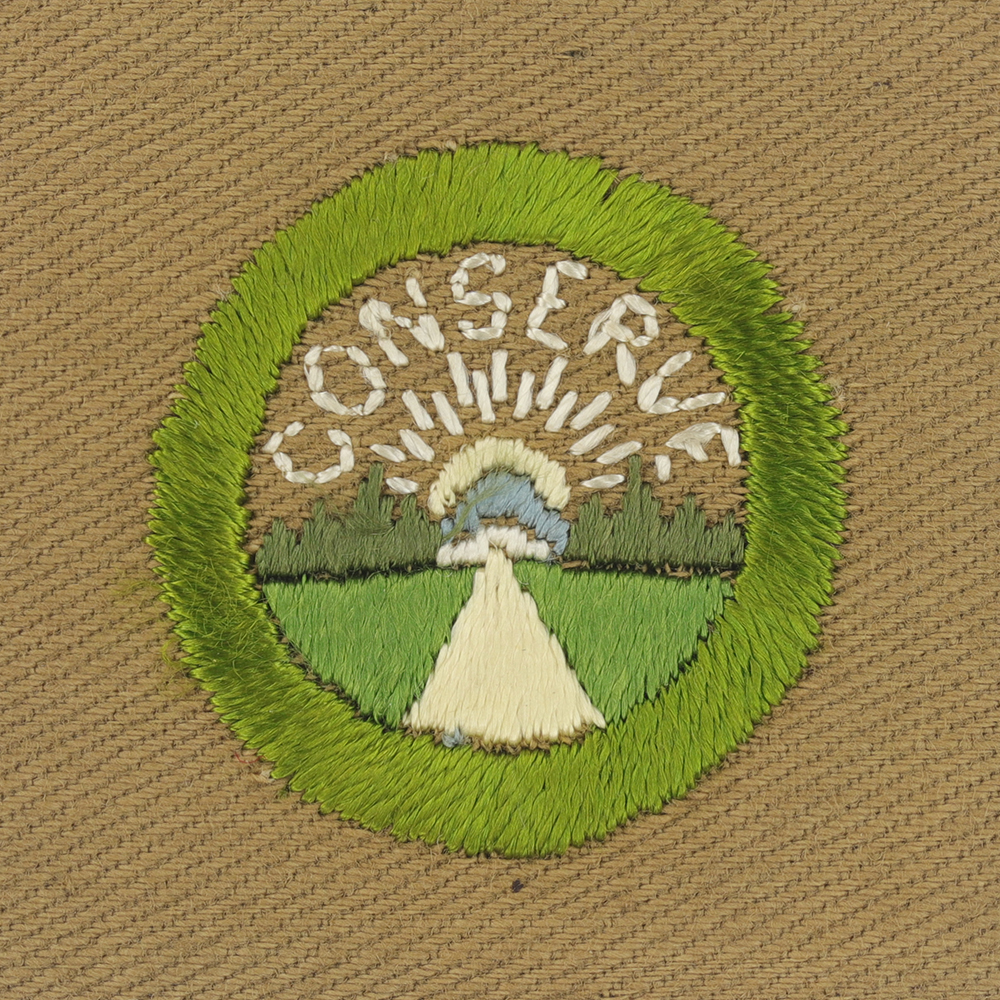
Fig. 1: Conser-AT1-Front
- Cloth: Heavyweight tan right twill
- Embroidery: Silk continuous
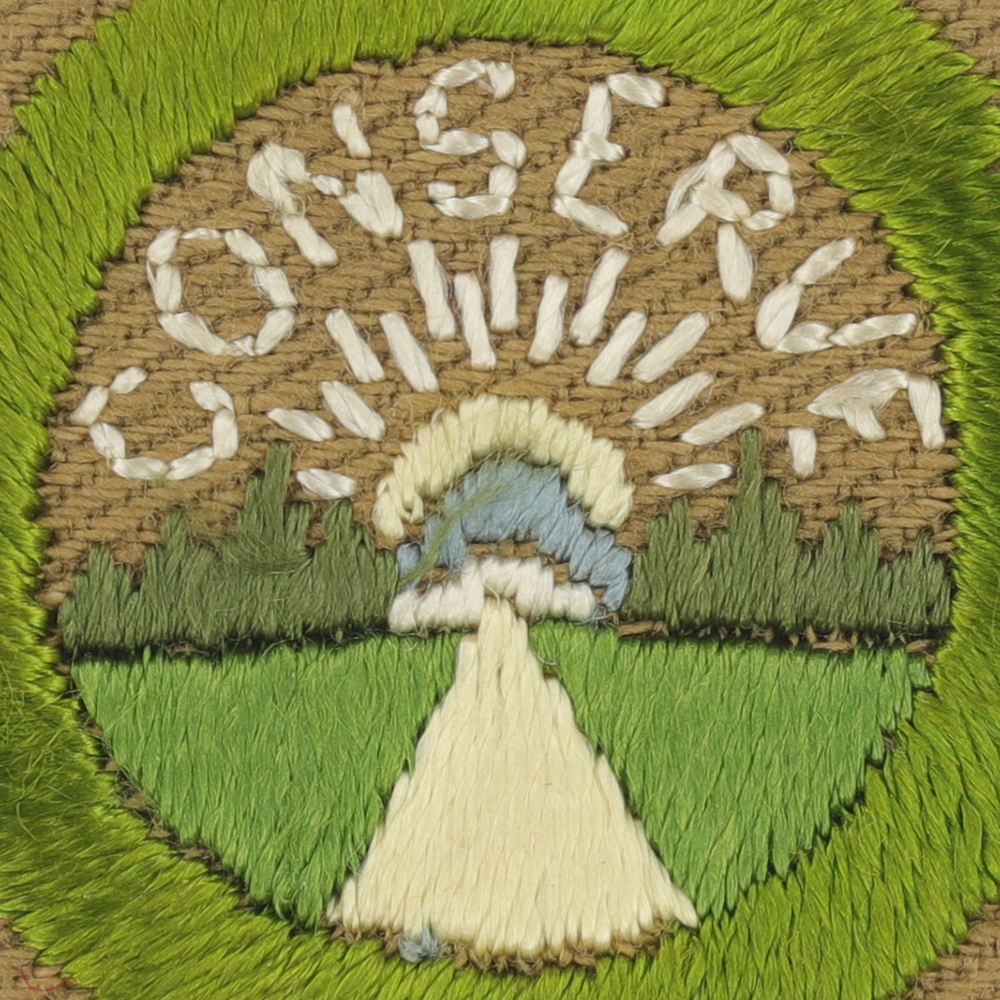
Fig. 2: Conser-AT1-Magnified
- Design: Vertical embroidered grass
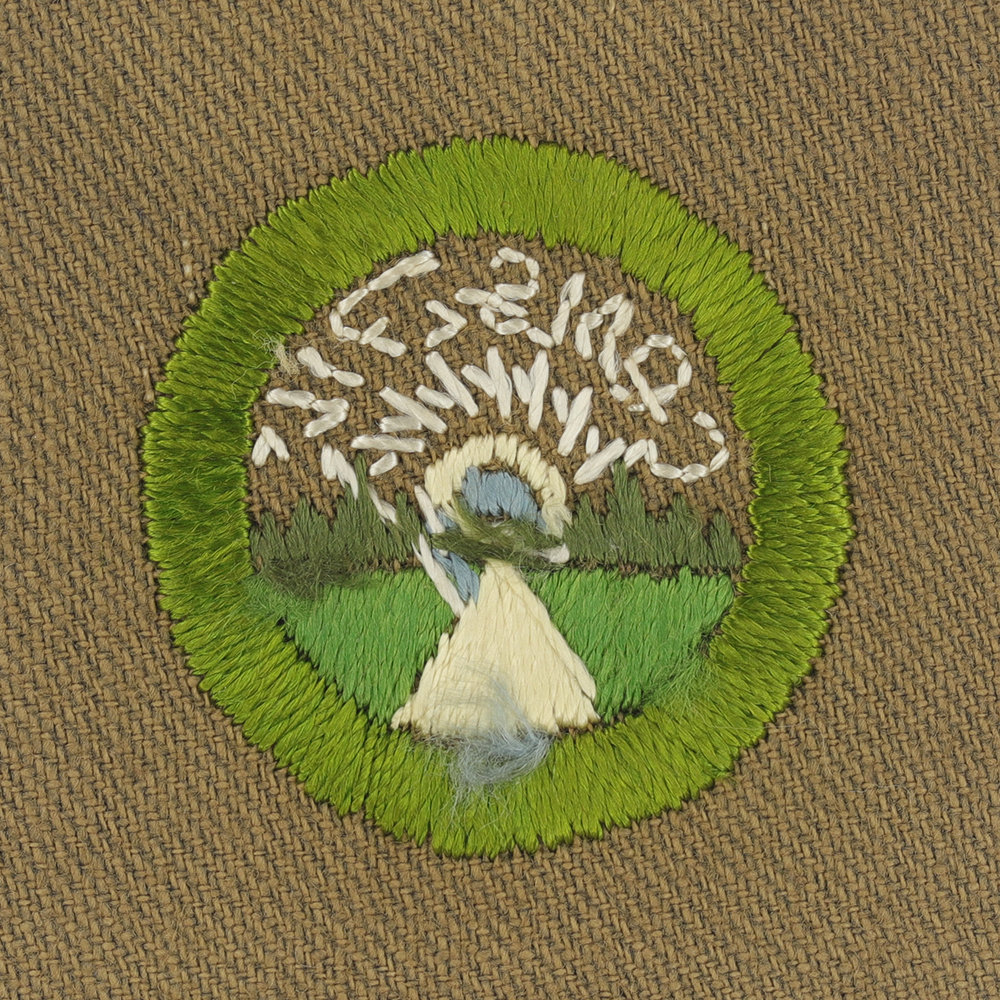
Fig. 3: Conser-AT1-Reverse
- Back: Black imprint
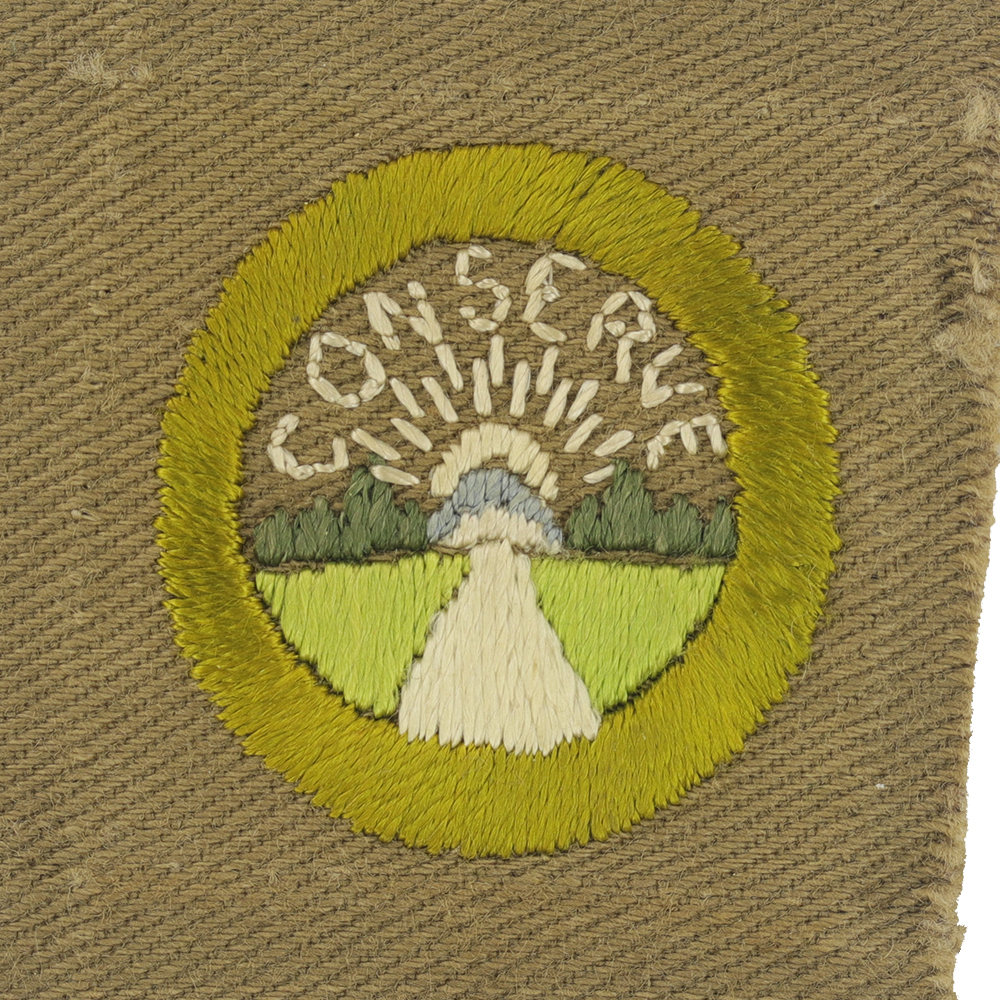
Fig. 4: Conser-AT1-mve1-front
- Minor variation: Letter differences, grass color differences

Fig. 5: Conser
- Back: Black imprint

Fig. 6: Conser-AT1-error3-front
- Manufacturing error: Type 3 error; twill back

Fig. 7: Conser-AT1-error3-reverse
- Back: Black imprint
Item Name: Conservation 1920 - 1933
Item ID: Conser-AT1
Collector Rating: 1
Pamphlets Used to Earn this Badge
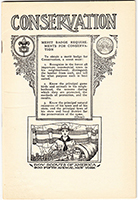
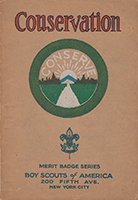
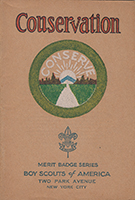
Requirement December 1916 until March 1927
1. Recognize in the forest all important commercial trees in his neighborhood; distinguish the lumber from each, and tell for what purpose each is best suited.
2. Know the principal game birds and animals in his neighborhood, the seasons during which they are protected, the methods of protection, and the results.
3. Know the principal natural resources of his town and of his state.
4. Know the principal natural resources of the United States, and have some idea of the history of the development of their use to the present time.
5. Understand what soil conservation, water conservation of minerals (including mineral fuels), and forest conservation involve; and know what the Government is doing to promote them.
6. Present evidence that he has actually been of some help in making effective the laws of his state for the protection of forests, or birds and animal life.
Requirements March 1927 until April 1929
1. Know the principal natural resources of his county and give the essence of any conservation laws affecting them.
2. Know for his region the principal game birds, animals and fish, and the seasons during which they are protected, how they are protected, and what are the results of protection.
3. Describe in detail one game bird, animal and fish common in his locality, and tell its habits of living, feeding, and rearing its young.
4. Present at least two photographs taken by himself of some phase of conservation of natural resources, and be able to describe thoroughly the conservation involved.
5. Present evidence of having directly assisted conservation by some practical deed, such as fighting a forest fire; checking erosion; planting trees; helping re-stock streams with fish; posting or distributing conservation notices; planting wild rice or other duck feed; feeding birds in winter; stopping stream and river pollution.
6. Know the conservation laws in general of his State.
Requirements August 1929 until December 1940, between December 1940 and January 1 1942 these requirements were optional.
1. Know the principal natural resources of his county and give the essence of any conservation laws affecting them.
2. Know for his region the principal game birds, animals and fish, and the seasons during which they are protected, how they are protected, and what are the results of protection.
3. Describe in detail one game bird, animal and fish common in his locality, and tell its habits of living, feeding, and rearing its young.
4. Present at least two photographs taken by himself of some phase of conservation of natural resources, and be able to describe thoroughly the conservation involved.
5. Present evidence of having directly assisted conservation by some practical deed, such as fighting a forest fire; checking erosion; planting trees; helping re-stock streams with fish; posting or distributing conservation notices; planting wild rice or other duck feed; feeding birds in winter; stopping stream and river pollution.
6. Know the conservation laws in general of his State.