-
Merit Badges
- Legend to identify Merit Badges
- 1910 British Merit Badges
- Square 1911 - 33
- Wide Crimped 1934 & 35
-
Narrow Tan Crimped 1936 - 42
- Tan Heavyweight Cloth with Silk Embroidery and Printed Back 1936 - 37
- Tan Heavyweight Cloth with Silk Embroidery and Plain Back 1937 - 38
- Tan Lightweight Cloth with Silk Embroidery and Plain Back 1938 - 39
- Tan Lightweight Cloth with Cotton Continuous Loop Embroidery and Plain Back 1939 - 42
- Tan Lightweight Cloth with Cotton Lockstitch Embroidery and Plain Back 1939 - 42
- Blue Background 1942 - 46
- Wartime 1942 - 46
- Khaki Narrow Crimped 1946 - 59
- Green Twill Gauze Back 1960 - 68
- Fully Embroidered Merrowed Edge 1960 - 72
- Unprinted Plastic Back 1972 - 01
- Printed Plastic Back 2002 - Current
-
Merit Badge Paper
- Merit Badge Applications
- Merit Badge Cards
-
Merit Badge Pamphlets
- Type 1 White Cover - Rectangle Drawing On Cover
- Type 2 White Cover 5-375" x 8" Title at Top
- Type 3A Tan Cover - 200 Fifth Avenue
- Type 3B Tan Cover - 2 line address New York City
- Type 3C Tan Cover - 2 line address New York N.Y.
- Type 3D Tan Cover - 1 line address New York N.Y.
- Type 4 Standing Scout Cover
- Type 5A War Cover
- Type 5B Red and White
- Type 6 Photo-Red Cover
- Type 7 Full Photo Cover or Bulls-eye Cover
- Type 8 Full Photo - Green Stripe Cover
- Type 9 Full Photo - Red Stripe Cover
- Type 10A Blue Stripe - Logo above bottom blue stripe - FDL centered
- Type 10B - Blue Stripe in bottom of photo area. FDL to left of text
- Special Covers
- Boy Craft Helps
- Merit Badge Counselor's Guides
-
Youth Position
- Junior Assistant Scoutmaster
- Senior Patrol Leader
- Assistant Senior Patrol Leader
- Patrol Leader
- Assistant Patrol Leader
- Troop Guide
- Scribe
- Quartermaster
- Instructor
- Chaplain Aide
- Den Chief
- Librarian
- Musician
- Webmaster
- Bugler
- Troop Historian
- Troop Representative
- Unit Representative
- Leadership Corps
- Honor Guard
- Leave No Trace Trainer
- Outdoor Ethics Guide
-
Patrol Medallions
- Patrol Medallions Introduction
- Legend to identify Patrol Medallions
- Patrol Shoulder Knot-Ribbons
- Felt Handmade Patrol Medallions
- Square Felt Patrol Medallions
- Round Broadcloth Patrol Medallions
- Red Twill Patrol Medallions
- Multi-Color Cloth Patrol Medallions
- Tan Cloth Patrol Medallions
- Patrol Medallion Back Patches
- Woodbadge Patrol Medallion
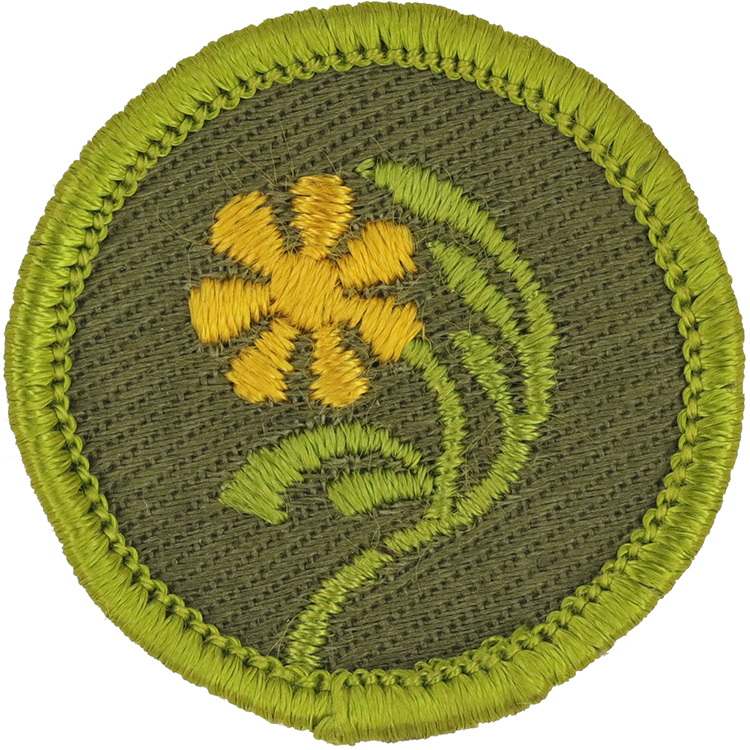
Fig. 1: Botany-F-Front
- Cloth: Green right twill
- Border: Merrowed
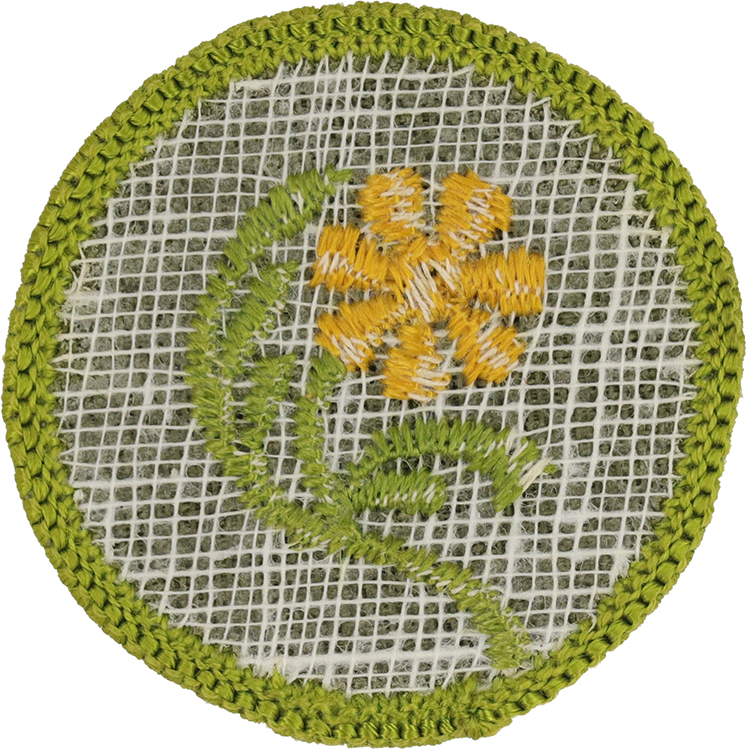
Fig. 2: Botany-F-Reverse
- Back: Gauze reinforced starched
Item Name: Botany 1961 - 1968
Item ID: Botany-F
Collector Rating: 1
Pamphlets Used to Earn this Badge
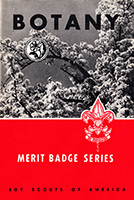
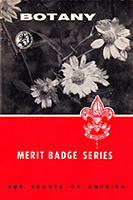
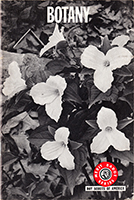
Requirements January 1, 1942 until June 1972. Between December 1940 and January 1, 1942 these requirements were optional
1. Make five field trips of at least two hours each, to observe wild plant life. Keep record based on field notes, of varieties of flowers found, with date, place, nature of locality, (swamp, roadside, woods, meadow, etc.) and other observations such as seeds, seed pods, leaf arrangements, insect attraction. (if photographs or sketches are included, record will be more interesting.)
2. Identify from living specimens at least 50 plant specimens.
3. Identify in three or more specimens all parts of a perfect and complete flower. Explain (a) how plants are pollenized; (b) how ferns differ from flowering plants.
4. Identify specimens of at least ten families of flowering plant, (other than trees), or submit properly labeled specimens of such families. (May be included as part of 8 B).
5. Know what plants are rare in his vicinity and what is being done or should be done to protect them.
6. Explain how plants use light, heat, water, oxygen, and carbon dioxide; how they manufacture their own food.
7. Submit or identify in field one specimen each of fungi, algae, lichens, and mosses. (Scouts living in regions where this requirement is not possible, may substitute five different species of ferns or desert plants.)
8. Carry out one of the following projects:
(a) Submit a seed collection, properly labeled, of at least 20 different kinds of seeds gathered by himself; germinate at least five species; find out all he can about different varieties of seeds and how they are scattered.
(b) Submit specimens of at least 30 species of flowering plants. Include leaf, stem, flower and root (if not of rare plant.) Mount neatly, label both with common and scientific name, date, place found, nature of locality.
(c) Make a study of plant life in an area of not less than 15 square feet for at least two months. Keep record of species found, type of locality, insect attraction, seeds, etc.
(d) Raise a wild flower or fern garden, including at least 5 different species of plants. Know (a) both common and scientific names of each, (b) proper method of transplanting and care.