-
Merit Badges
- Legend to identify Merit Badges
- 1910 British Merit Badges
- Square 1911 - 33
- Wide Crimped 1934 & 35
-
Narrow Tan Crimped 1936 - 42
- Tan Heavyweight Cloth with Silk Embroidery and Printed Back 1936 - 37
- Tan Heavyweight Cloth with Silk Embroidery and Plain Back 1937 - 38
- Tan Lightweight Cloth with Silk Embroidery and Plain Back 1938 - 39
- Tan Lightweight Cloth with Cotton Continuous Loop Embroidery and Plain Back 1939 - 42
- Tan Lightweight Cloth with Cotton Lockstitch Embroidery and Plain Back 1939 - 42
- Blue Background 1942 - 46
- Wartime 1942 - 46
- Khaki Narrow Crimped 1946 - 59
- Green Twill Gauze Back 1960 - 68
- Fully Embroidered Merrowed Edge 1960 - 72
- Unprinted Plastic Back 1972 - 01
- Printed Plastic Back 2002 - Current
-
Merit Badge Paper
- Merit Badge Applications
- Merit Badge Cards
-
Merit Badge Pamphlets
- Type 1 White Cover - Rectangle Drawing On Cover
- Type 2 White Cover 5-375" x 8" Title at Top
- Type 3A Tan Cover - 200 Fifth Avenue
- Type 3B Tan Cover - 2 line address New York City
- Type 3C Tan Cover - 2 line address New York N.Y.
- Type 3D Tan Cover - 1 line address New York N.Y.
- Type 4 Standing Scout Cover
- Type 5A War Cover
- Type 5B Red and White
- Type 6 Photo-Red Cover
- Type 7 Full Photo Cover or Bulls-eye Cover
- Type 8 Full Photo - Green Stripe Cover
- Type 9 Full Photo - Red Stripe Cover
- Type 10A Blue Stripe - Logo above bottom blue stripe - FDL centered
- Type 10B - Blue Stripe in bottom of photo area. FDL to left of text
- Special Covers
- Boy Craft Helps
- Merit Badge Counselor's Guides
-
Youth Position
- Junior Assistant Scoutmaster
- Senior Patrol Leader
- Assistant Senior Patrol Leader
- Patrol Leader
- Assistant Patrol Leader
- Troop Guide
- Scribe
- Quartermaster
- Instructor
- Chaplain Aide
- Den Chief
- Librarian
- Musician
- Webmaster
- Bugler
- Troop Historian
- Troop Representative
- Unit Representative
- Leadership Corps
- Honor Guard
- Leave No Trace Trainer
- Outdoor Ethics Guide
-
Patrol Medallions
- Patrol Medallions Introduction
- Legend to identify Patrol Medallions
- Patrol Shoulder Knot-Ribbons
- Felt Handmade Patrol Medallions
- Square Felt Patrol Medallions
- Round Broadcloth Patrol Medallions
- Red Twill Patrol Medallions
- Multi-Color Cloth Patrol Medallions
- Tan Cloth Patrol Medallions
- Patrol Medallion Back Patches
- Woodbadge Patrol Medallion
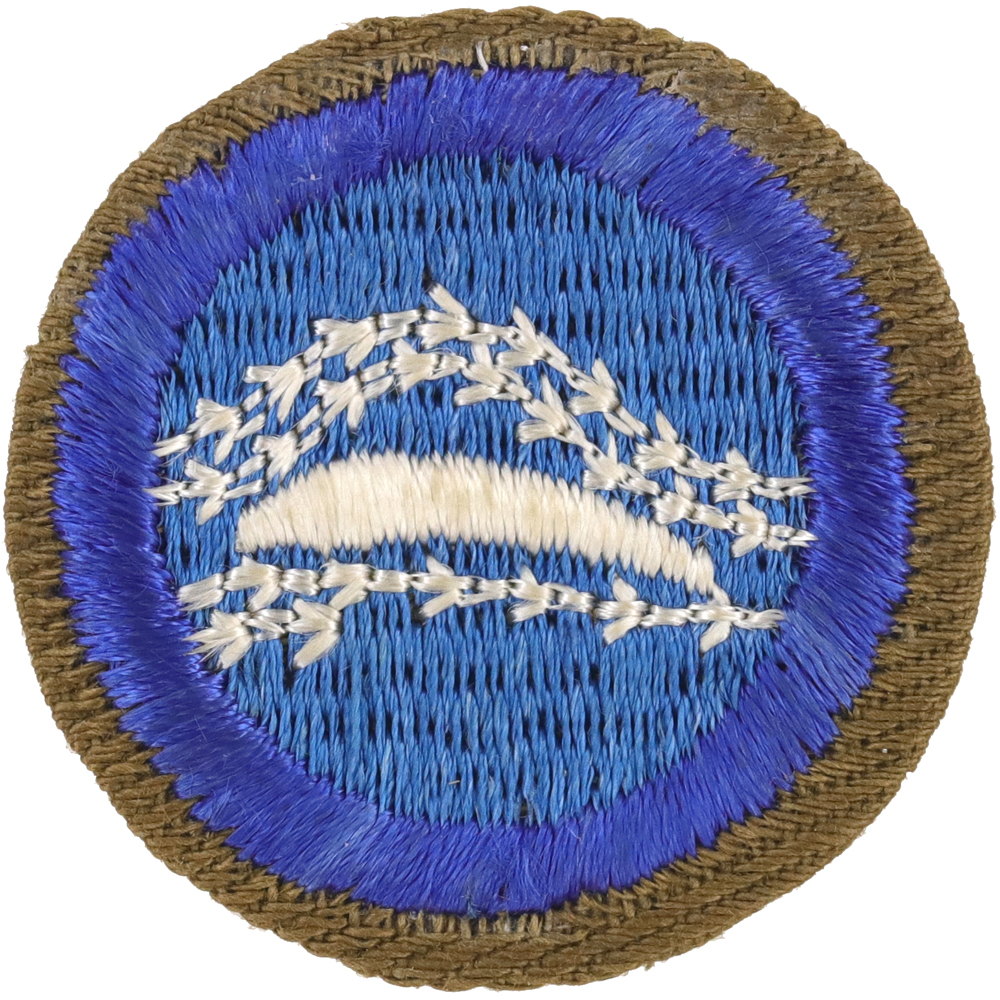
Fig. 1: Aerody-E-Front
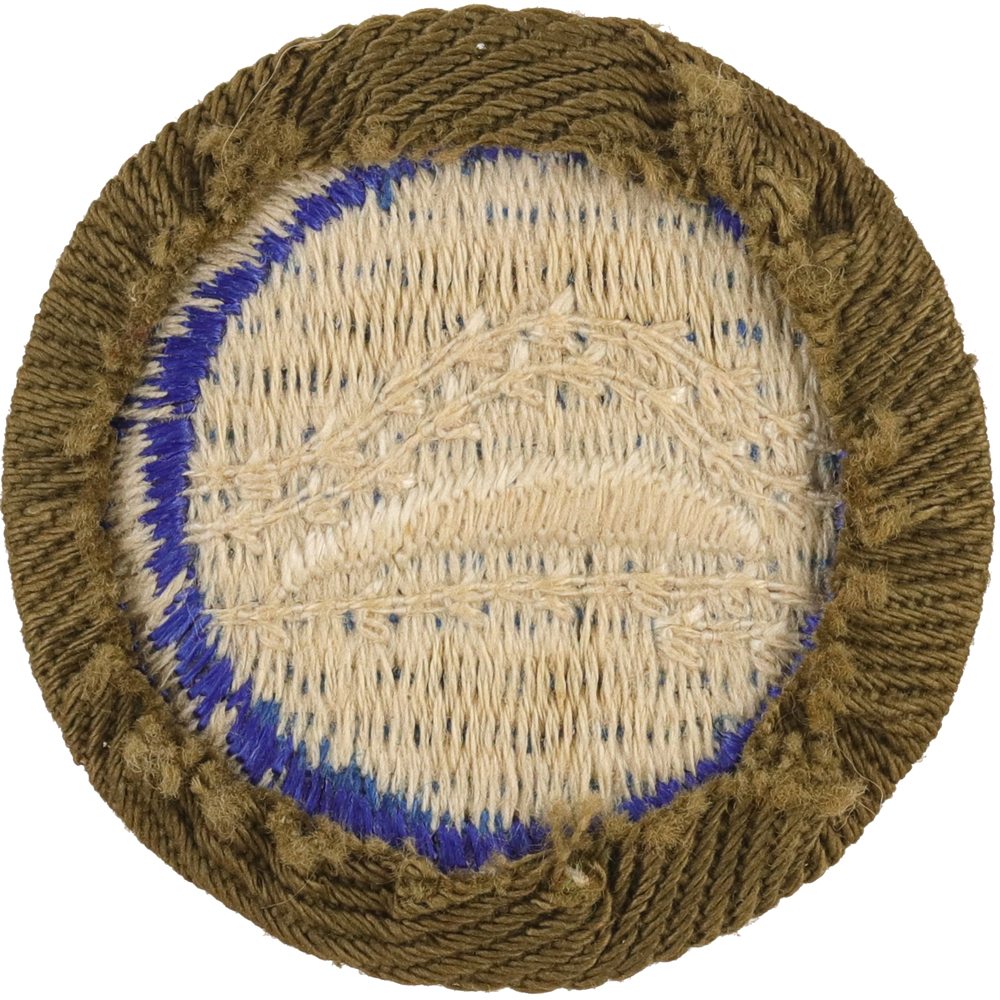
Fig. 2: Aerody-E-Reverse
- White lockstitch/li>

Fig. 3: Aerody-E-mve1-front
- Cloth: Khaki right twill
- Embroidery: Cotton
- Special: Blue border

Fig. 4: Aerody-E-mve1-reverse
- Black lockstitch/li>
Item Name: Aerodynamics 1942 - 1947
Item ID: Aerody-E
Collector Rating: 5
Pamphlet Used to Earn this Badge
Requirements Aprip 1942 until 1947
- (a)Show that air has weight and pressure, using as an impro- Page vised barometer, a sauce dish or pan and a tall cylindrical glass of water; (b) Explain variations in air due to altitude, and point out some resulting problems for engines, for flight path hazards, and for the pilot himself.
- Demonstrate Bernoulli's law that air speed reduces pressure, using a spool and a small card, or a tube and a ping pong ball.
- (a) Build a six-inch airfoil wing section of 5-inch chord and high light cambers, and mount and demonstrate with it the used in explaining to another Scout the Aeronautics Merit Badge outline of the positive forces of Thrust and Lift and the negative forces of Gravity and Drag
- (a) Build three drag demonstration airfoils of same cross-section width—-cube, cylinder, "streamline"—using a cylindrical oatmeal box, some cardboard, paper and glue; (b) improvise small easy-rolling 4-wheel support to demonstrate air resistance of these airfoils in an air current
- Build and demonstrate the use of a small simple wind tunnel to provide controlled air current; OR build and demonstrate a simple air speed measuring device
- Build a rubber band powered flying model airplane, of some type new to the builder, and fly in some competition. (Kit may be used.)
- (a) Draw rough side-view outline of monoplane and use in ex- plaining the "angle of attack" (British—angle of incidence); (b) demonstrate why an air stream action enables "control surfaces" to control the direction of the plane; (c) also review what stick and pedal action changes which control surfaces..
- (a) Indicate six or more ways for a pilot, about to land, to identify wind direction; (b) also explain the relative plus and minus air speed advantages of taking-off and landing into the wind; (c) explain the aerodynamics of stalling
- (a) Test the relative speeds in.air current of two propellers of approximately the same diameter and blade area, but of different pitch; (b) point out the advantages of the modern variable pitch propeller